XML
August 10, 2023 |
permanent
Markup Language #
- tags
- Markup Language
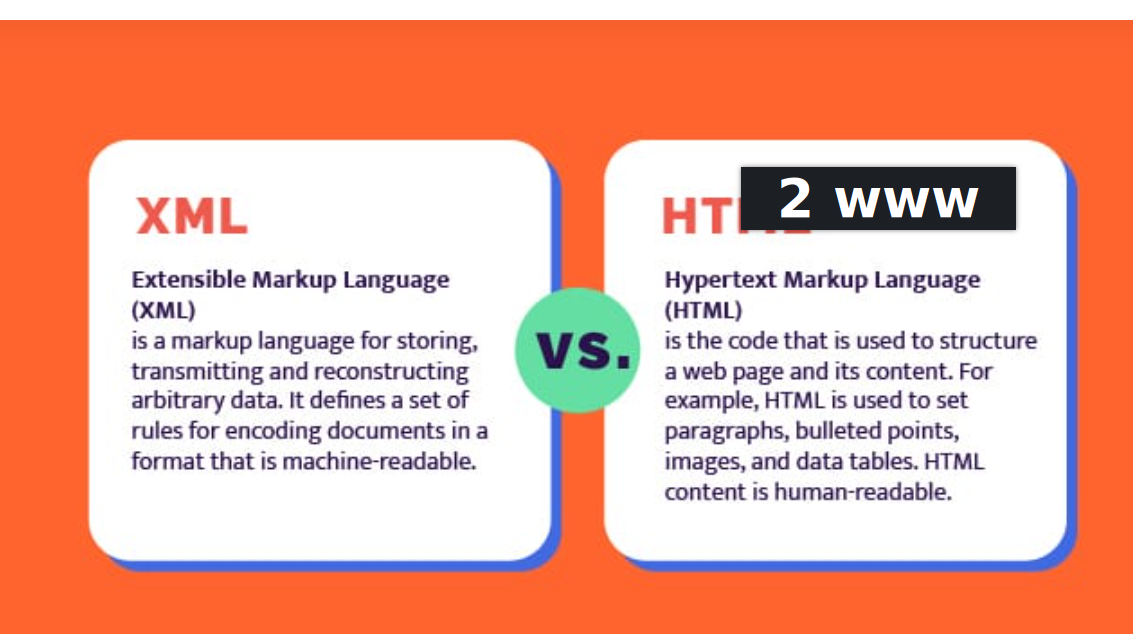
Extensible Markup Language (XML) is a generalized format for representing structured information, especially for the web. Like HTML and SGML, XML requires the use of elements and structure.
- XML stands for eXtensible Markup Language
- XML is a markup language much like HTML
- XML was designed to store and transport data
- XML was designed to be self-descriptive
- XML is a W3C Recommendation
- Machine readable formats
HTML vs XML #
XML Namespaces - The xmlns Attribute #
When using prefixes in XML, a namespace for the prefix must be defined.
The namespace can be defined by an xmlns attribute in the start tag of an element.
The namespace declaration has the following syntax. xmlns:prefix=“URI”.
<root>

<h:table xmlns:h="http://www.w3.org/TR/html4/">
  <h:tr>
    <h:td>Apples</h:td>
    <h:td>Bananas</h:td>
  </h:tr>
</h:table>

<f:table xmlns:f="https://www.w3schools.com/furniture">
  <f:name>African Coffee Table</f:name>
  <f:width>80</f:width>
  <f:length>120</f:length>
</f:table>

</root>
XSD #
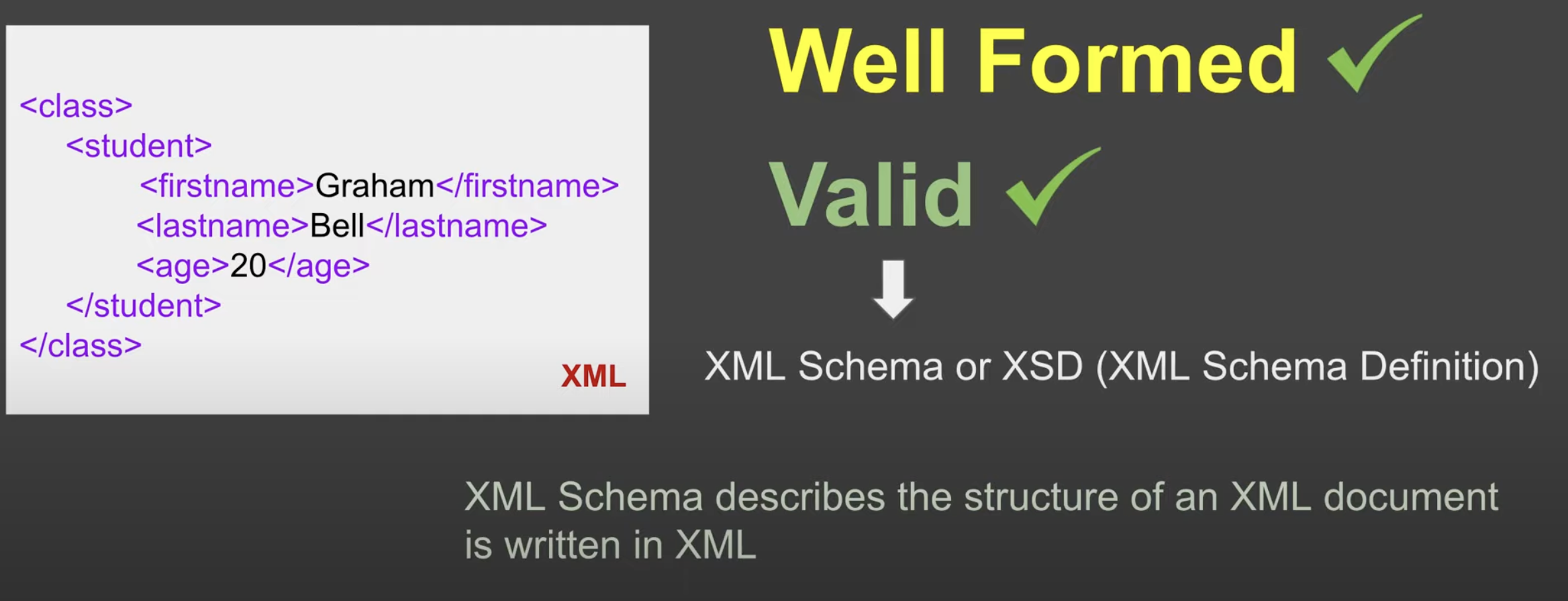
The XML Schema language is also referred to as XML Schema Definition (XSD).
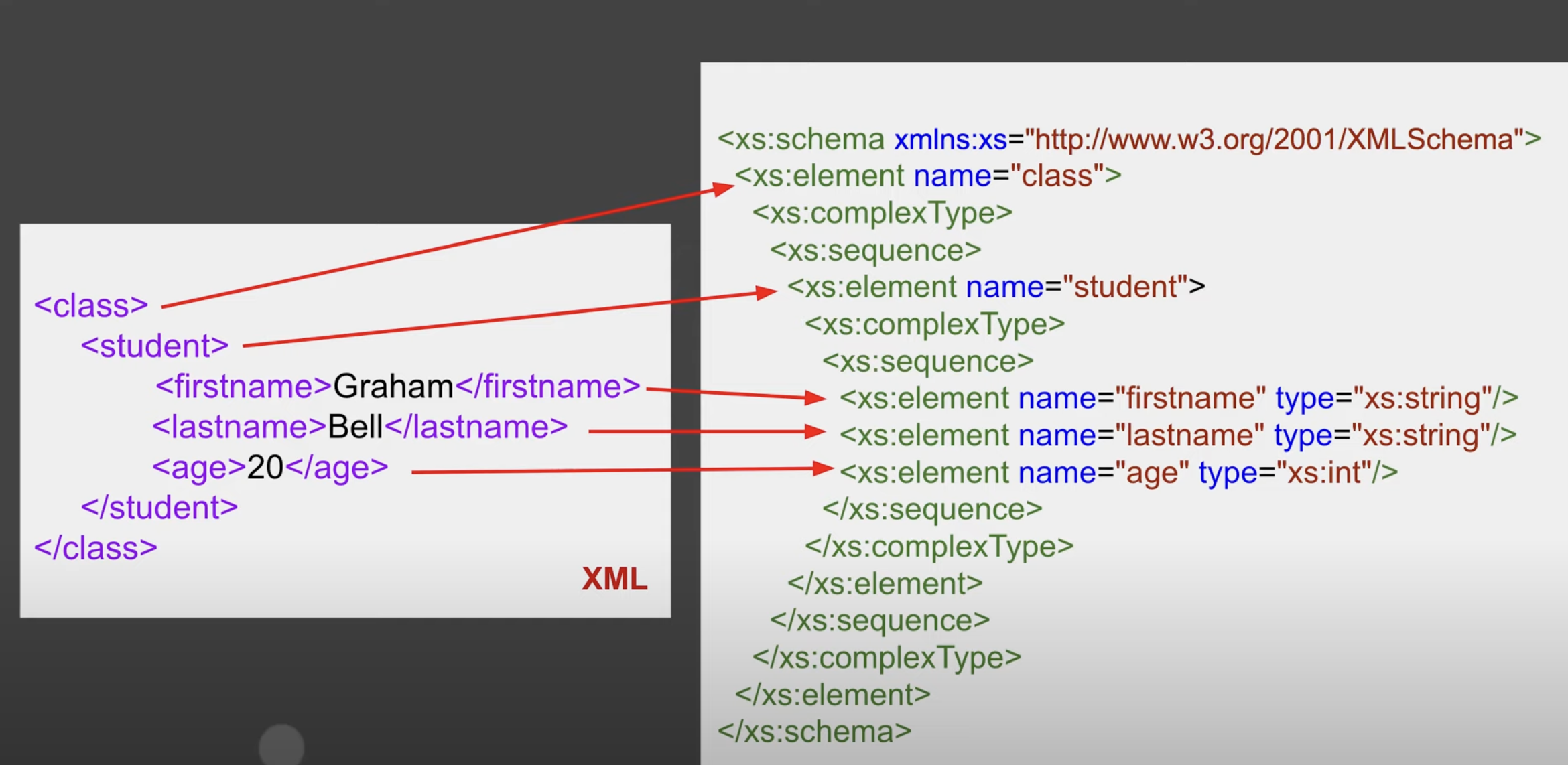
<?xml version="1.0"?>
<xs:schema xmlns:xs="http://www.w3.org/2001/XMLSchema">

<xs:element name="note">
  <xs:complexType>
    <xs:sequence>
      <xs:element name="to" type="xs:string"/>
      <xs:element name="from" type="xs:string"/>
      <xs:element name="heading" type="xs:string"/>
      <xs:element name="body" type="xs:string"/>
    </xs:sequence>
  </xs:complexType>
</xs:element>

</xs:schema>
Why #
One of the greatest strength of XML Schemas is the support for data types.
- It is easier to describe allowable document content
- It is easier to validate the correctness of data
- It is easier to define data facets (restrictions on data)
- It is easier to define data patterns (data formats)
- It is easier to convert data between different data types