User Story Mapping
- tags
- Tool, PM, Data Visualization Tool
Summary #
It turns out there is, and the technique is called user story mapping. It’s a way of taking all those user stories and arranging them in a way that a) makes sense, b) that helps you work faster and c) helps you discover issues sooner. URL
Activities #
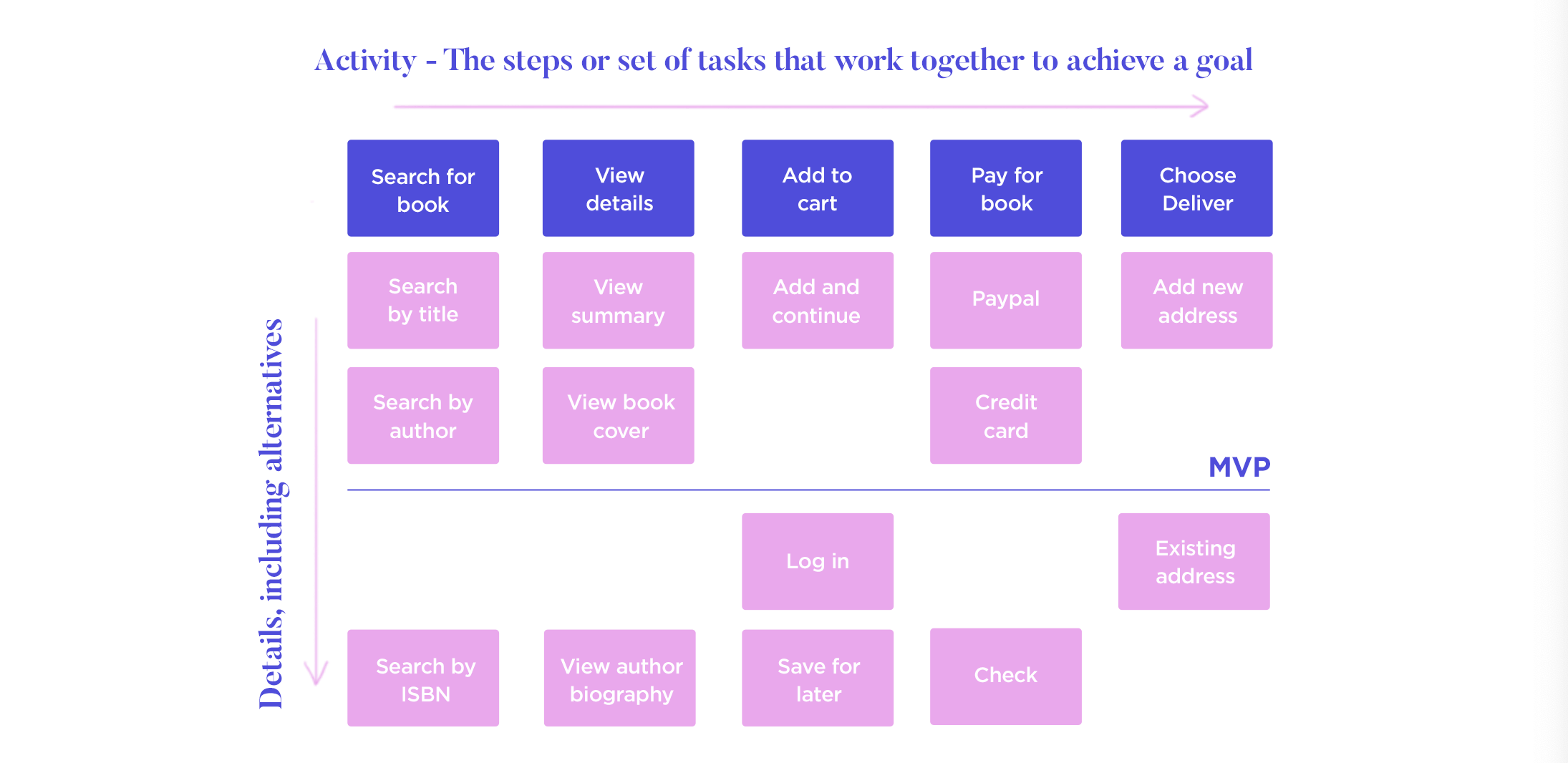
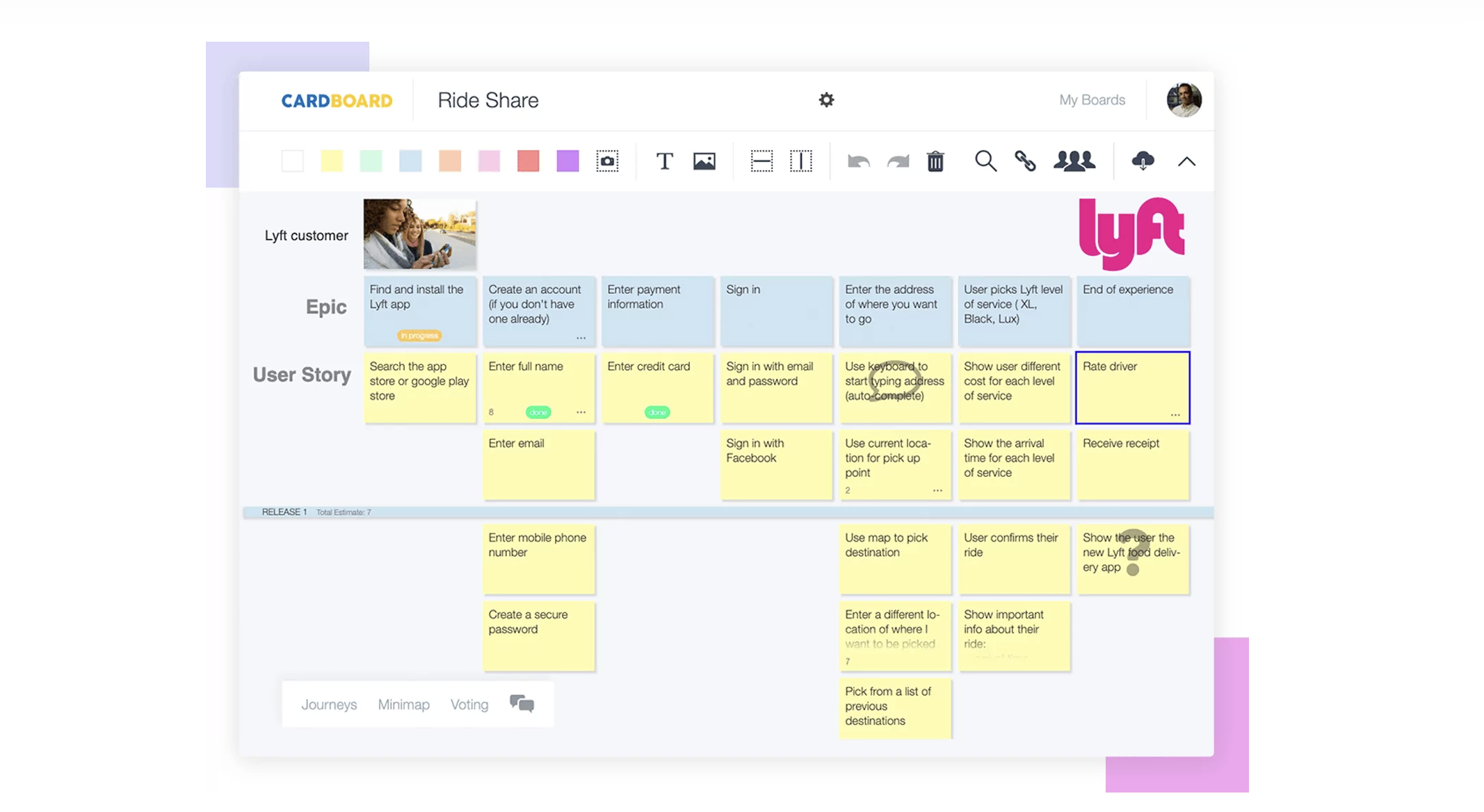
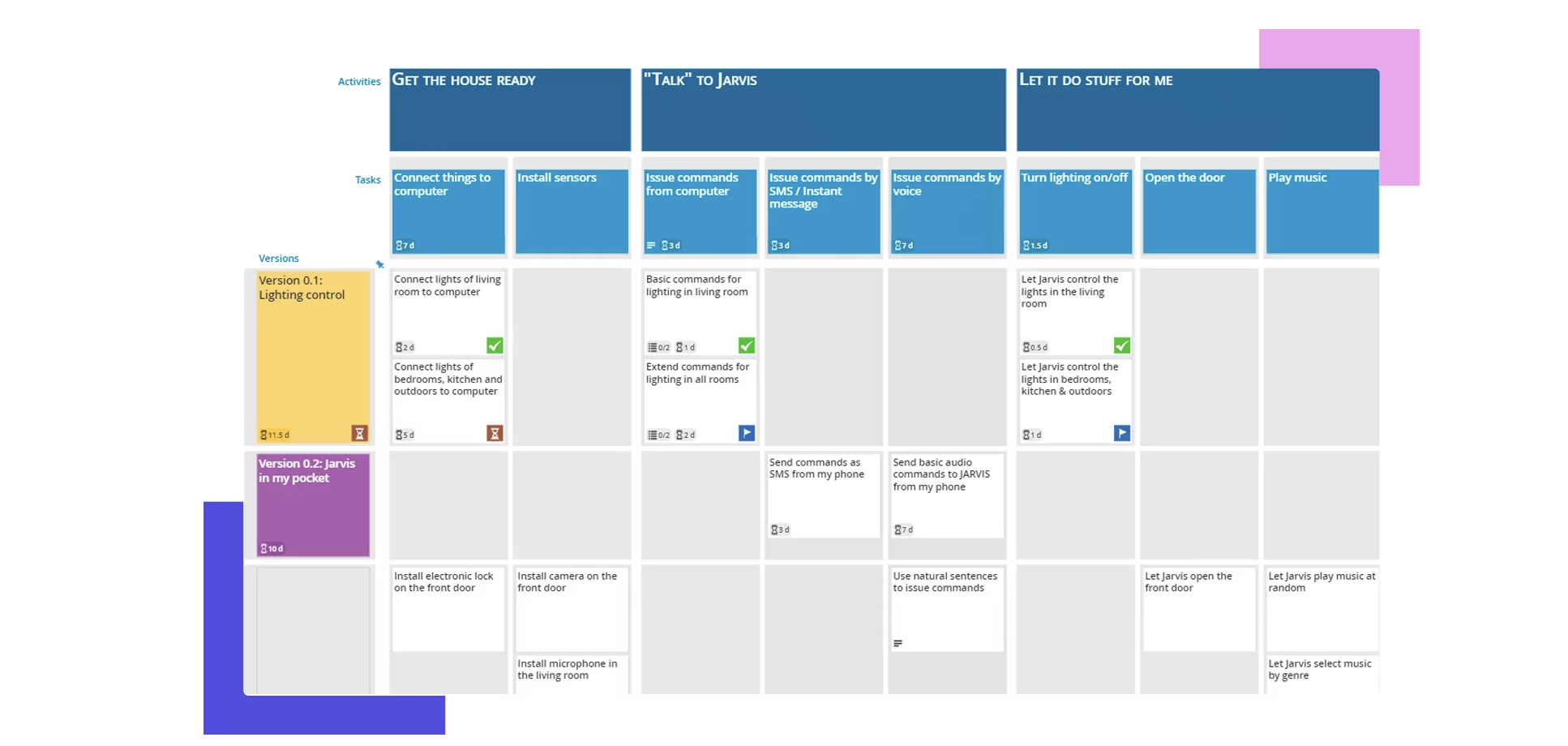
The first element you’ll add to your user story maps will be “activities”. Each activity card or sticky note will represent a process that your user goes through in your product.
JAK: High level process from left to right.
Let’s say there are three main activities users will carry out with our fictional eCommerce, Giraffe Specs:
- Signup
- Product purchase
- Product rating
Epics #
Create a narrative backbone with epics
JAK: More detailed process from left to right.
Signup with personal details
Add payment option
Product search
Product purchase
Product rating
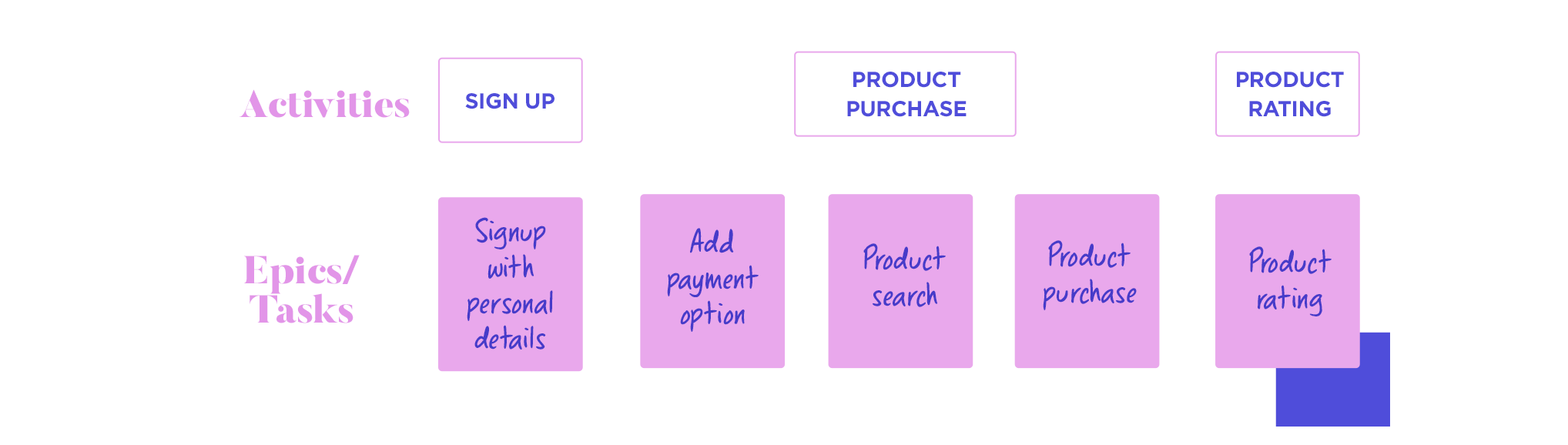
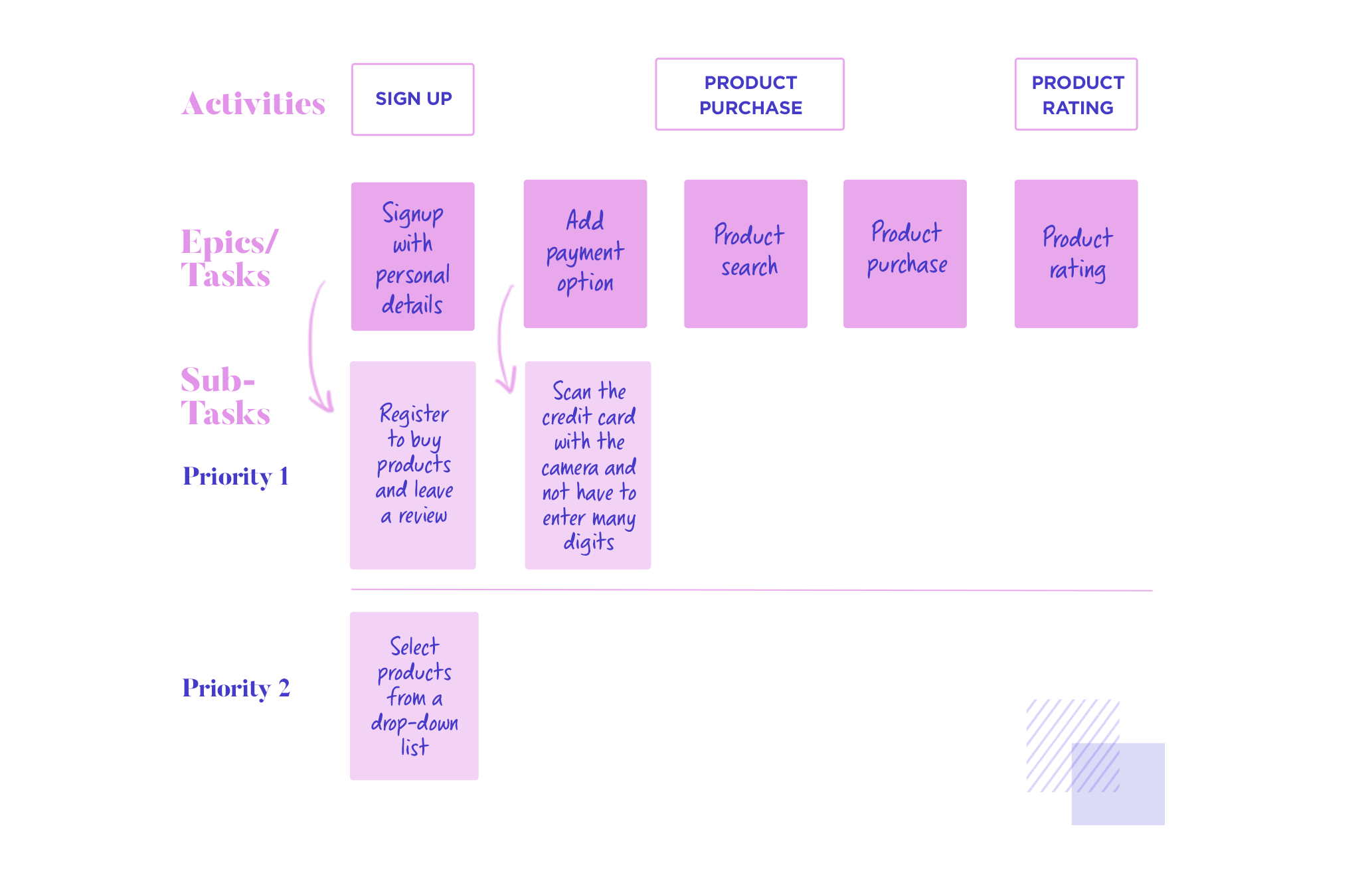
Our epics will form what’s called a “backbone” and will represent a left-to-right narrative along an x-axis. It’ll show a logical sequence of steps a user will take to complete each activity. It’s an important part of the user story map as it lays the foundation for the entire product development flow. Below the epics, we’ll place our user stories.
User Stories #
User stories are normally ranked vertically down a y-axis in order of priority, with the highest at the top.
Benefits #
Ever been faced with a mountain of a task and asked yourself the question “where do I start?”
One of the main benefits of user story mapping is that it helps us picture how a user might use our product in real life and thus prioritize feature development accordingly.
Provides a starting point #
Reveals holes in user flow #
Uncover possible friction point #
Put the whole project perspective #
- what the project does
- what it takes to deliver the project
- what it takes to deliver the MVP
MVP #
Figure out the features needed to implement the MVP.
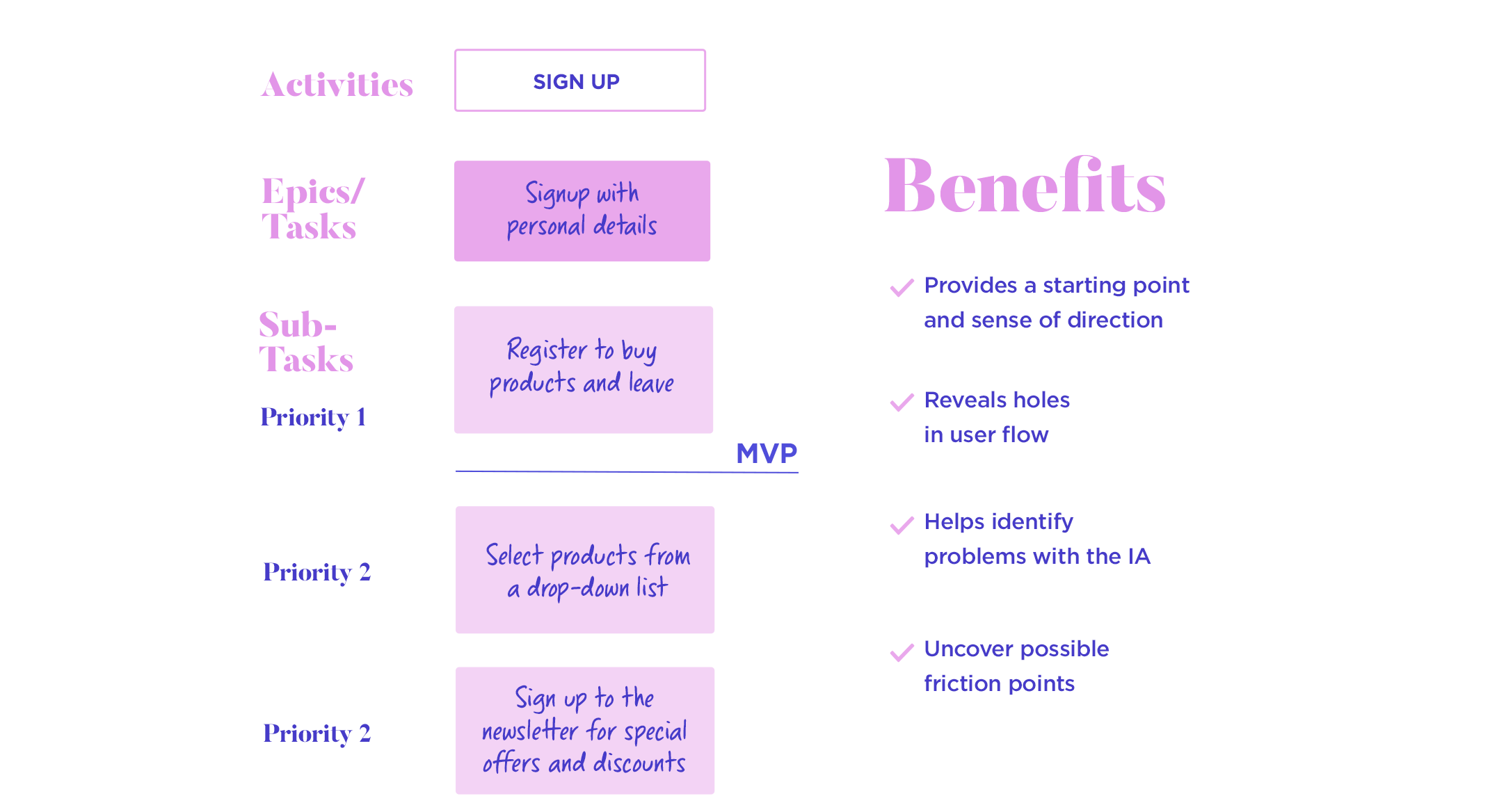 In addition to that, the user story mapping technique also provides a brilliant framework for testing features because it depicts the features in order of priority. It shows which ones we need to build out first.
Alternative to flat backlog #
backlog does have the structure and goal information.
Lastly, apart from allowing us to more simply organize user stories and feature requirements, it also provides a way of organizing tasks from a flat backlog instead of working from a list. approach.
Working with a list can sometimes cause a team to feel disconnected from the end goal. This is because nothing is in context. It’s also harder to get an idea at a glance of where your team is in terms of MVP completion or product readiness. It can be an attractive alternative solution for teams that are tired of working with never-ending backlog lists.
Great alternative to Use Cases #
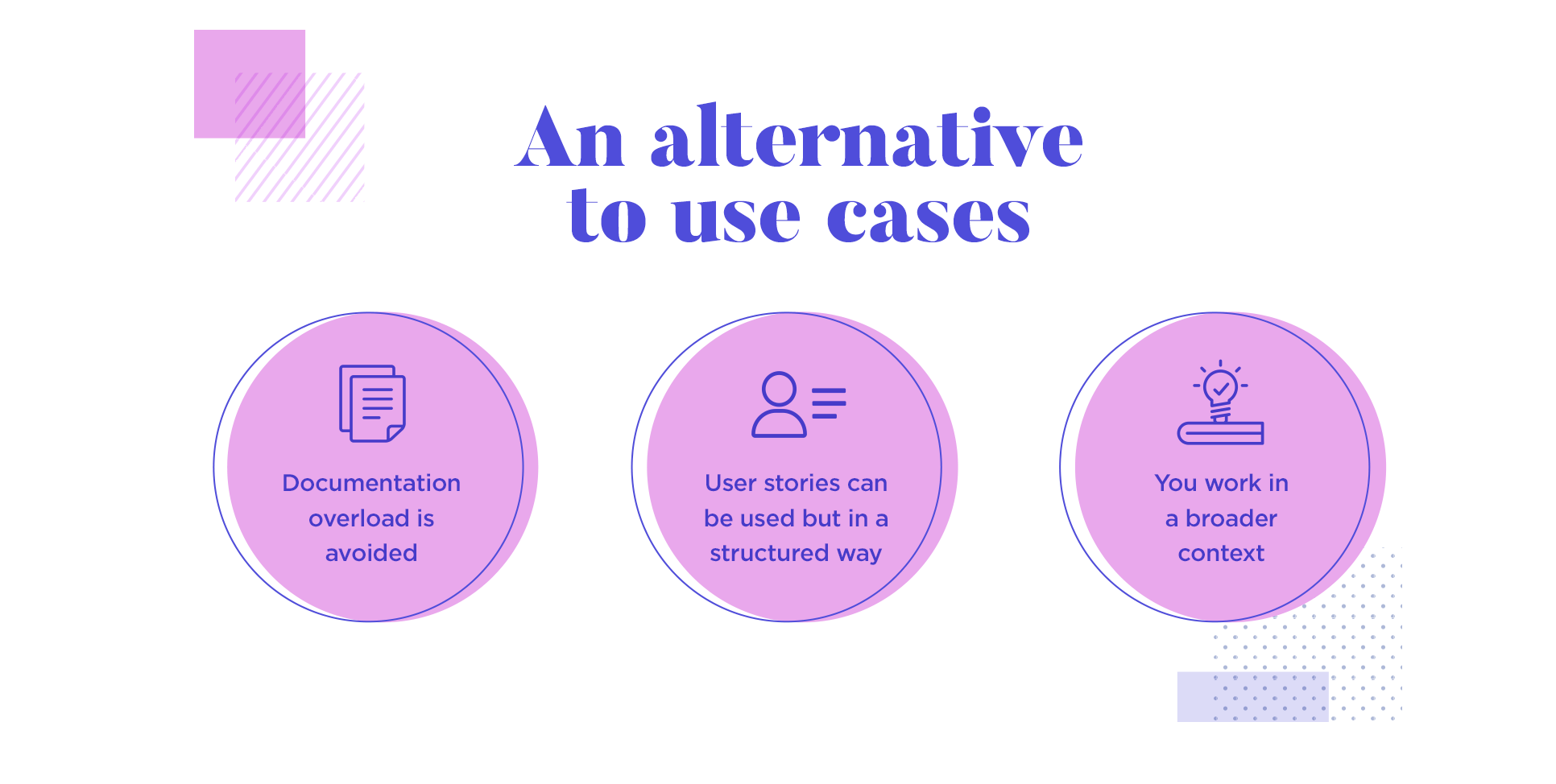
Creating user story maps is a good alternative to not going down the use case route. Let’s say you just want to use user stories and avoid complex use case documentation, but are worried about a lack of structure. User story mapping is a great solution.
Helps in planning sprints #
Lastly, a further benefit when it comes to user story mapping is that it can also help you and your team to plan out your sprints. For example, using release slicing and drawing dividing lines or horizontal swim lanes and separating your vertical stories into groups helps you plan out your sprints and iterations.
These divisions thus help you decide on the most important group of features to work on in each given sprint. This is because they descend in order of priority. For example, you might decide that for the first sprint, you’ll draw a line under the first two rows of user stories, which represent features, and then reserve the rest for a later iteration in future sprints.
Analysis #
Tools to implement story mapping #
Easy agile (user story mapping for Jira) #
#
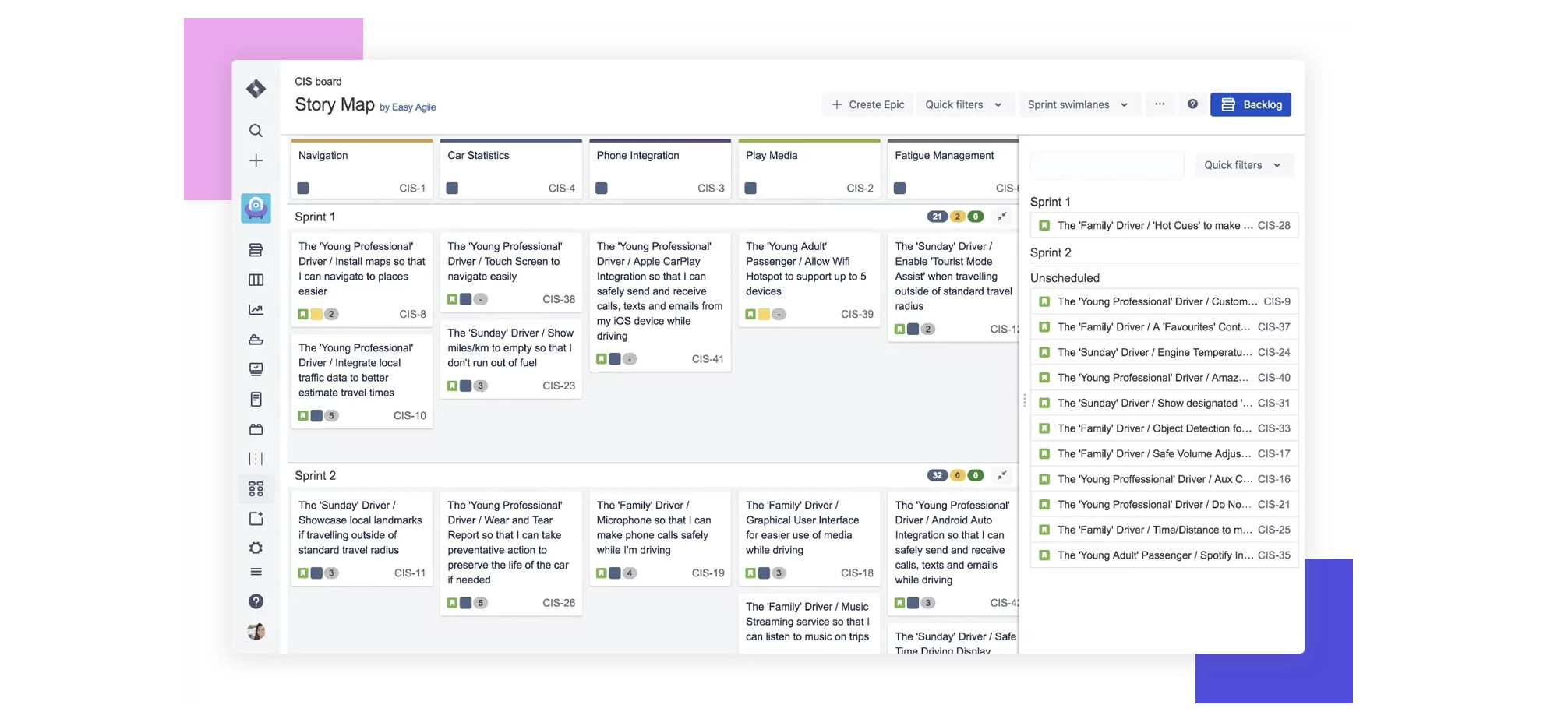
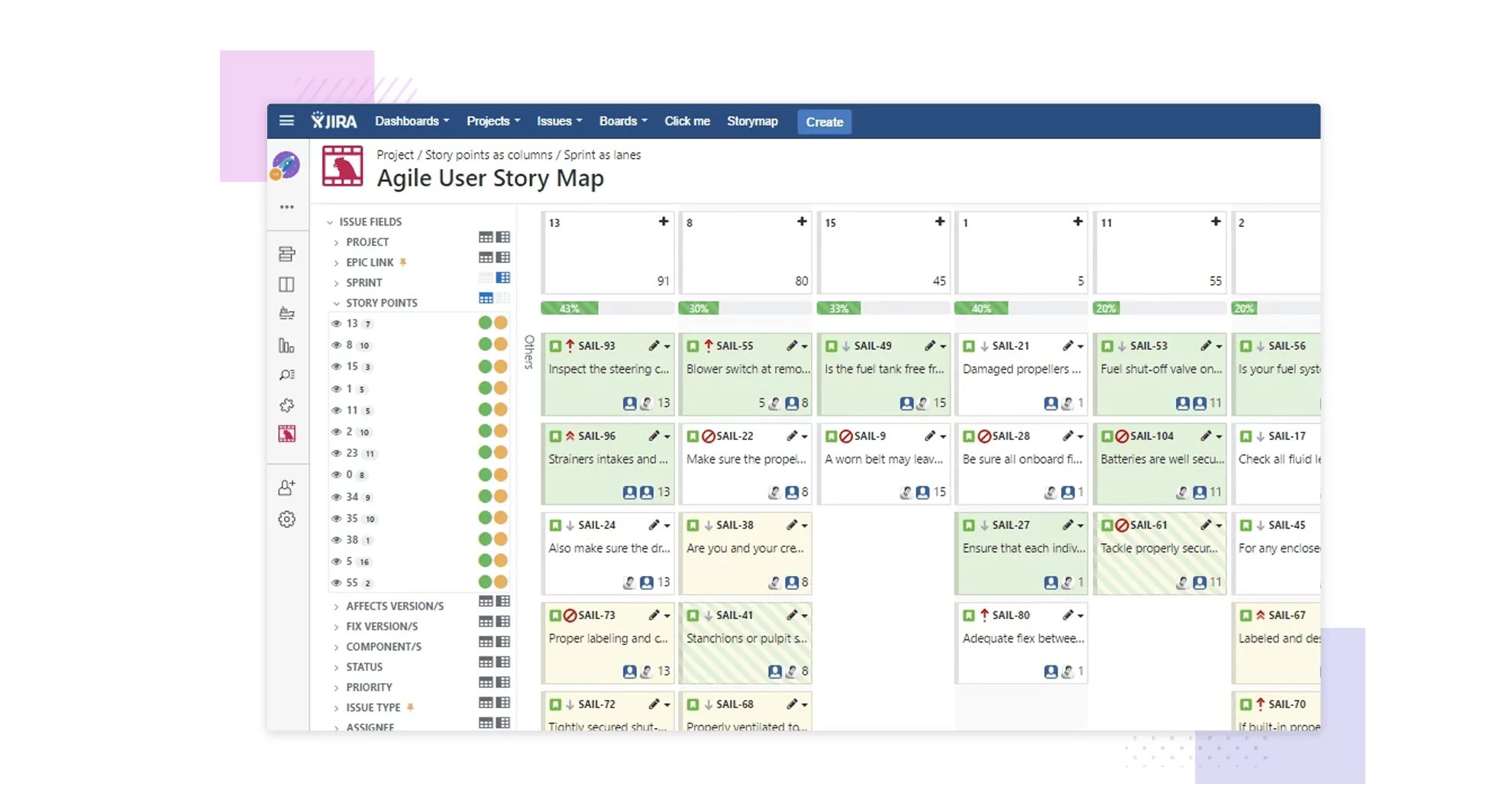
Bauer: Agile User Story Map for Jira #
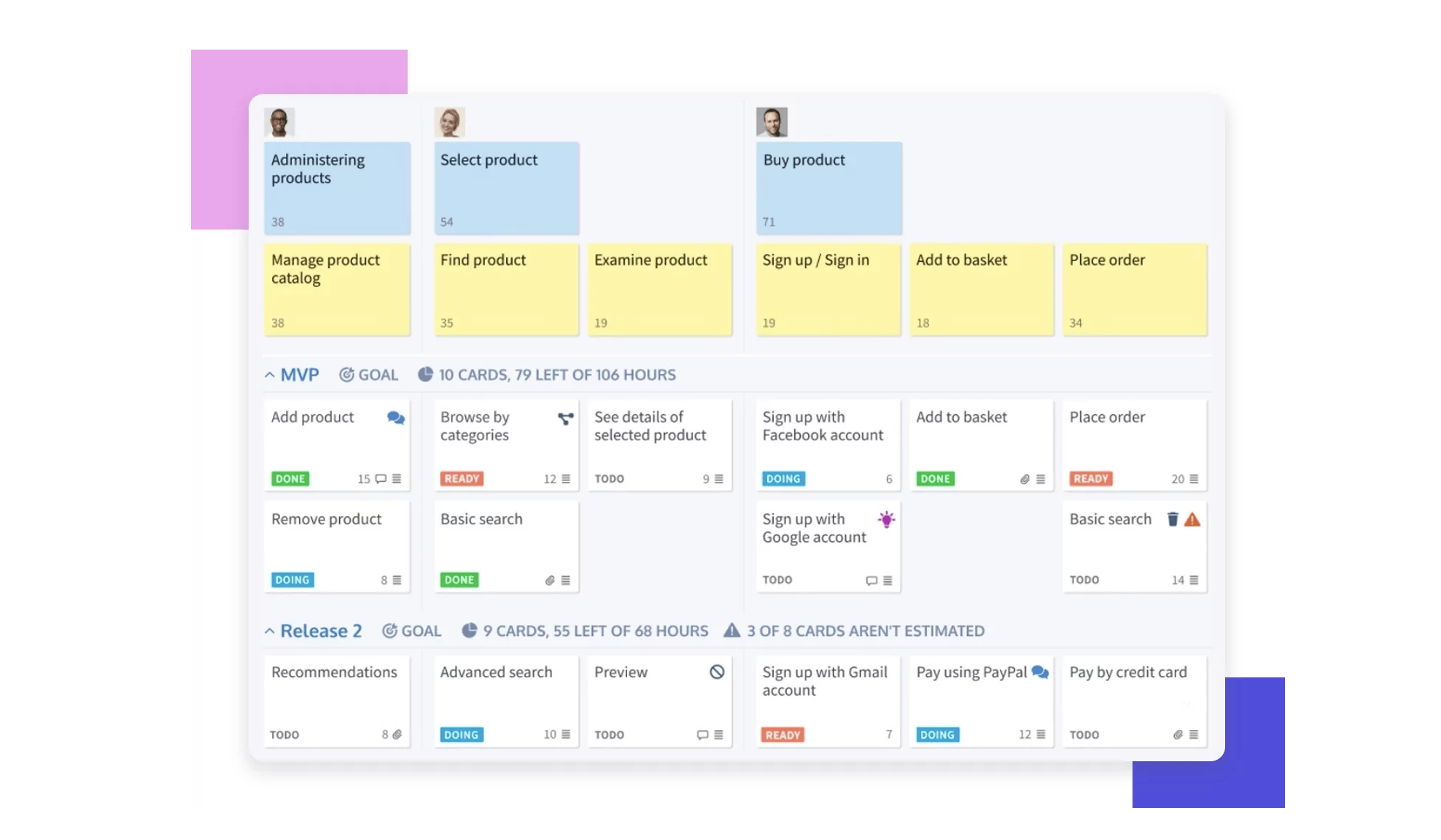
StoriesOnBoard #
Cardboard - Lyft #
FeatureMap #
Books #
User Story Mapping by Jeff Patton
When to use them or Use Cases? #
:ID: 8588FC63-65F2-40DC-9A6E-AC2373754E2F
There are several situations in which it might be appropriate to use a User Story Map:
- When you need to understand the overall user experience and ensure that the product is developed in a way that is intuitive and easy to use.
- When you need
to prioritize the development of the most important features and functionality, ensuring that efforts are focused on the most valuable work. - When you need to plan and prioritize short-term iterations within a specific product or service, making them useful for Agile Software Development.
When you are using an Agile methodology, such as Scrum or Kanban, to guide the development process and prioritize work.
Overall, User Story Maps are valuable tools for Agile software development and can help teams deliver high-quality products that meet the needs of their users.
Difference between User Story Mapping and Roadmap #
Although Roadmaps and User Story Maps are both planning and visualization tools that are used in project management and software development, there are some key differences between the two concepts.
The scope, the level of detail included or the audience are some of the differences between Roadmaps and User Story Maps
Important differences #
One of the main differences is the scope of the two tools. Roadmap are typically used to plan and visualize the overall direction and progress of a project, whereas User Story Maps are used to
organize and prioritize individual user storieswithin a specific product or service.In terms of the audience for each tool,Roadmaps are often used to communicate with stakeholders and provide a clear overview of the project to a broad audience , while User Story Maps are typically used within the development team to guide the development process and prioritize work.
Finally, the time frame that each tool covers is also different. Roadmaps are often used to plan and visualize the long-term direction and progress of a project, while User Story Maps are typically used to plan and prioritize short-term iterations within a specific product or service.