TCP
#
- tags
- The Transmission Control Protocol (TCP) is one of the main protocols of the Internet protocol suite.
TCP provides reliable, ordered, and error-checked delivery of a stream of octets (bytes) between applications running on hosts communicating via an IP network.
TCP provides the “connection-oriented” logic, ordering and control
It originated in the initial network implementation in which it complemented the Internet Protocol (IP).
Therefore, the entire suite is commonly referred to as TCP/IP.
Major internet applications such as the World Wide Web, email, remote administration, and file transfer rely on TCP, which is part of the Transport Layer of the TCP/IP suite. SSL/TLS often runs on top of TCP.
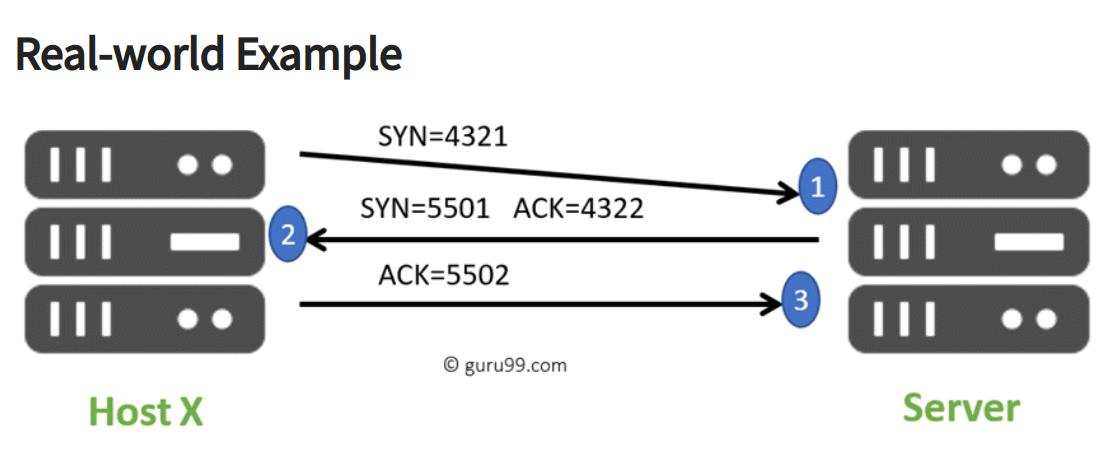
SYN, SYN-ACK,ACK #
| Message | Description |
|---|---|
| Syn | Used to initiate and establish a connection. It also helps you to synchronize sequence numbers between devices. |
| ACK | Helps to confirm to the other side that it has received the SYN. |
| SYN-ACK | SYN message from local device and ACK of the earlier packet. |
| FIN | Used to terminate a connection. |
TCP vs #
TLS handshakes occur after a TCP connection has been opened via a TCP handshake.
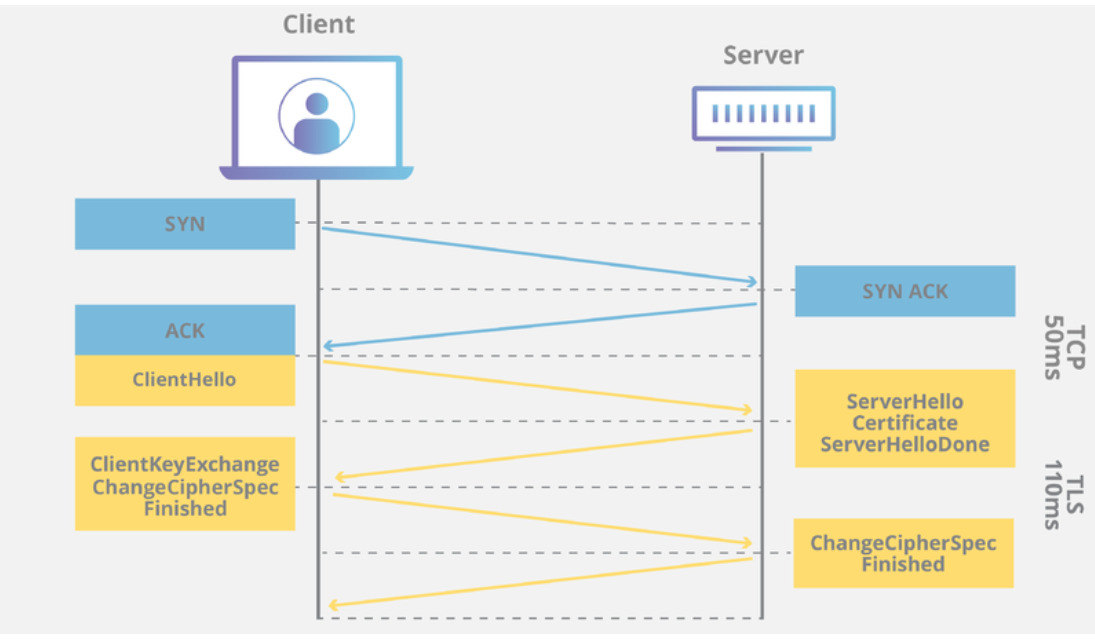
- TCP and SSL/TLS are 2 separate ‘handshakes’.
- The TCP handshake just confirms the transmission () (compared to UDP that does not care…)
- TLS handshakes occur after a TCP connection has been opened via a TCP handshake.
During the course of a TLS handshake, the client and server together will specify which version of TLS (TLS 1.0, 1.2, 1.3, etc.) they will use, decide on which cipher suites (see below) they will use authenticate the identity of the server via the server’s public key and the SSL certificate authority’s digital signature and generate session keys in order to use symmetric encryption after the handshake is complete