Kubernetes in OCI
tags :
Managing Kubernetes on OCI #
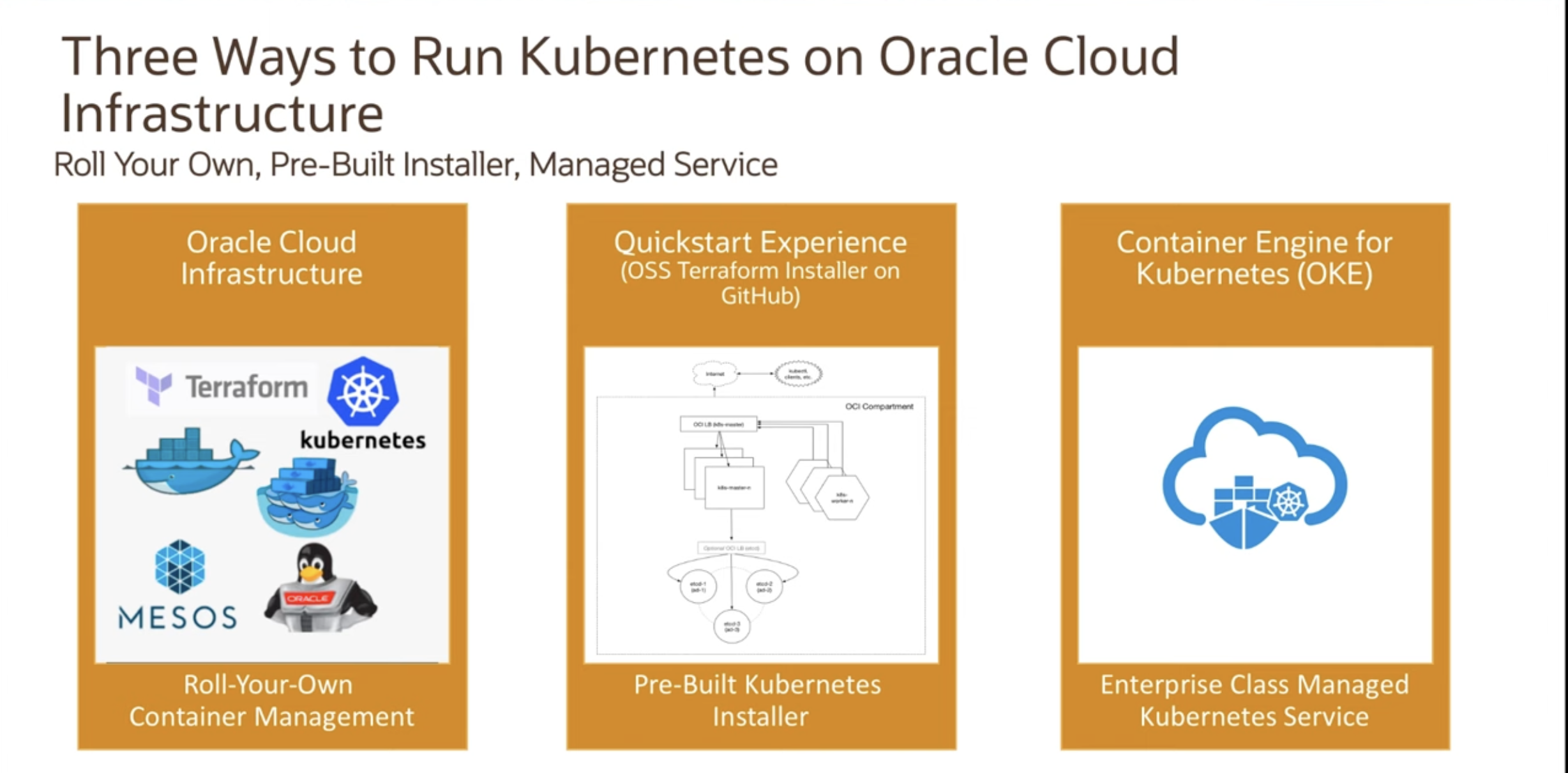
youtube Three options
OKE (Options 3) #
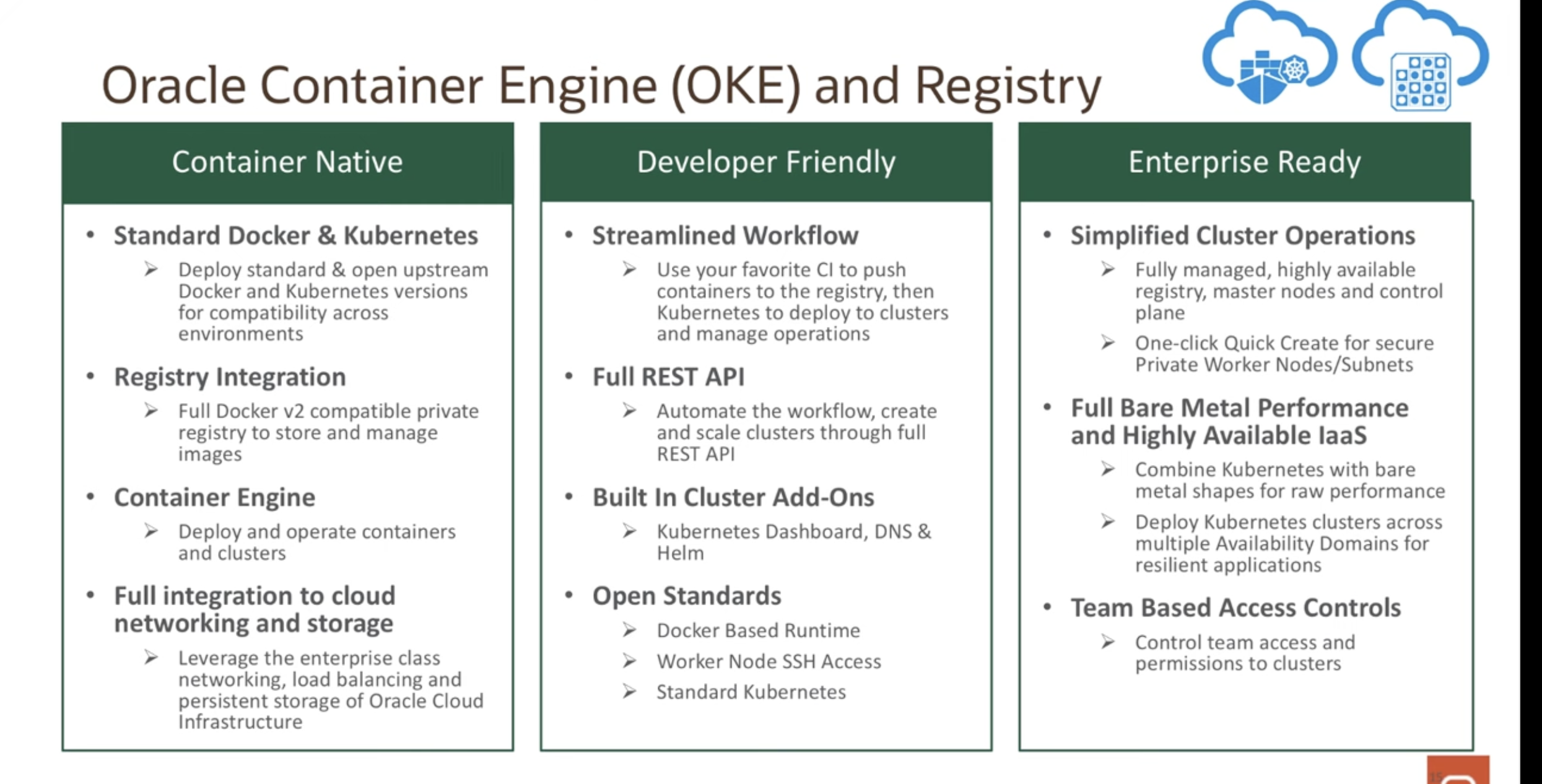
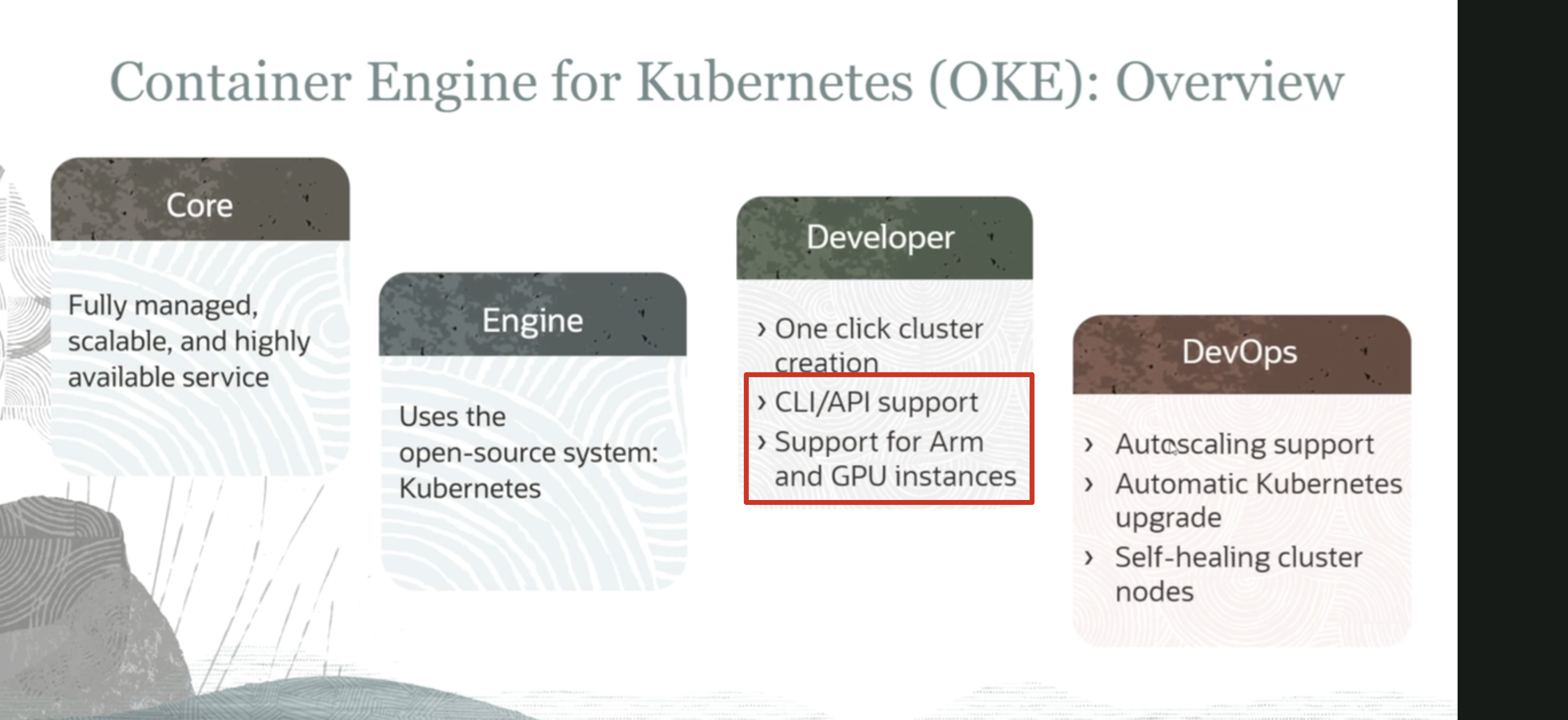
Fully managed Kubernetes cluster
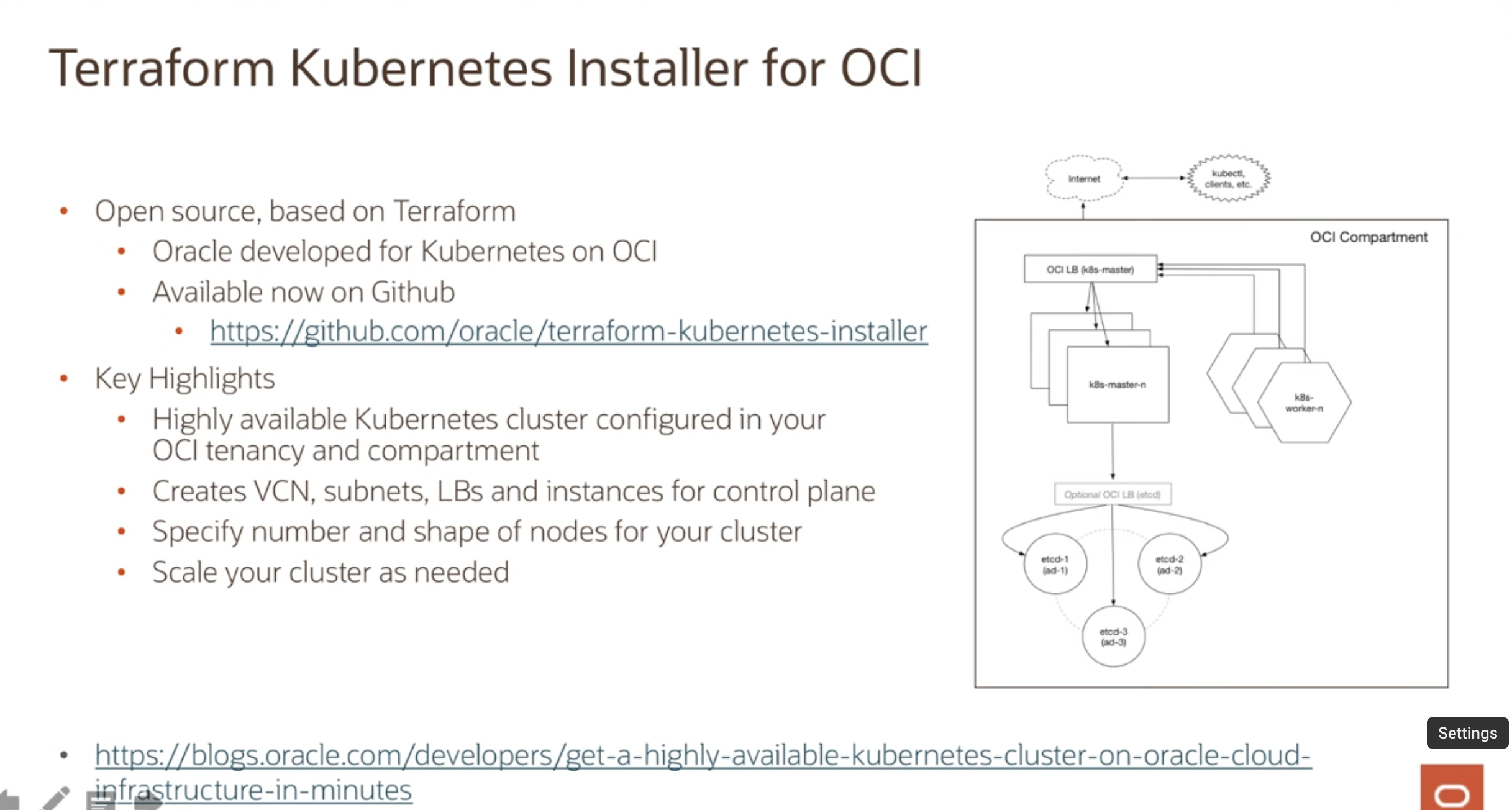
Challenges while managing cluster ourselves, not using managed service #
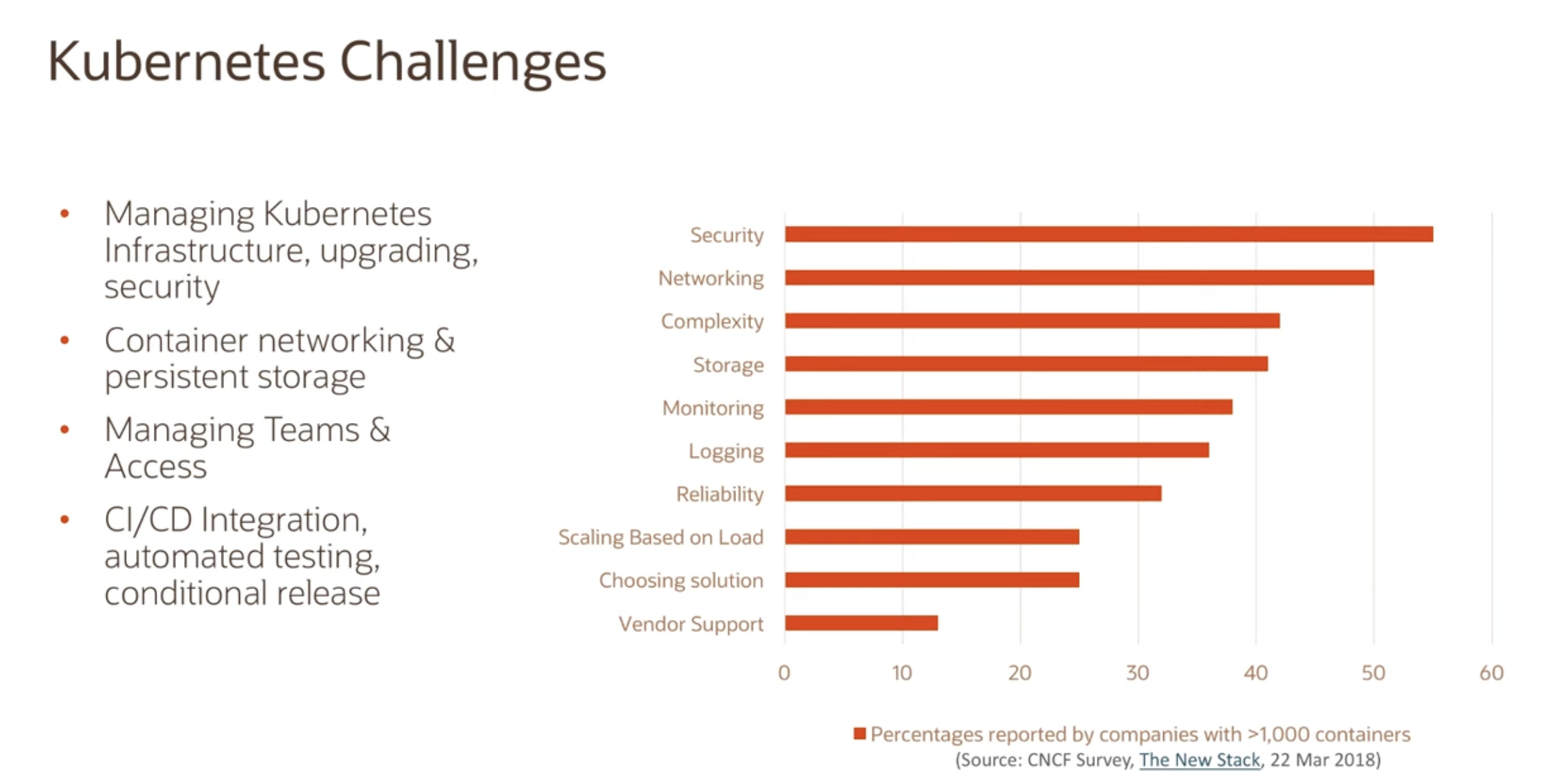
- difficult to manage ourselves, too complex
Answer #
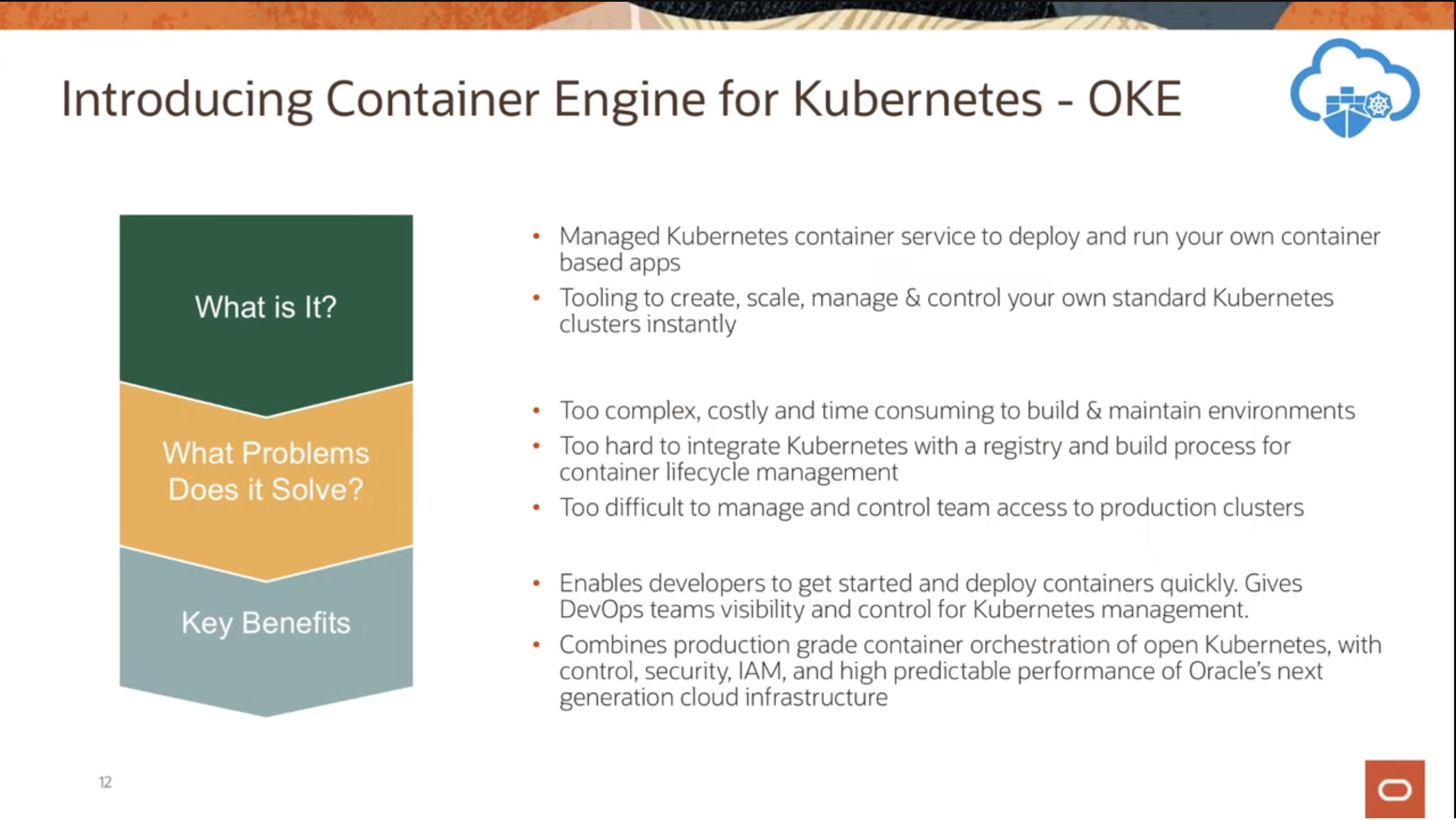
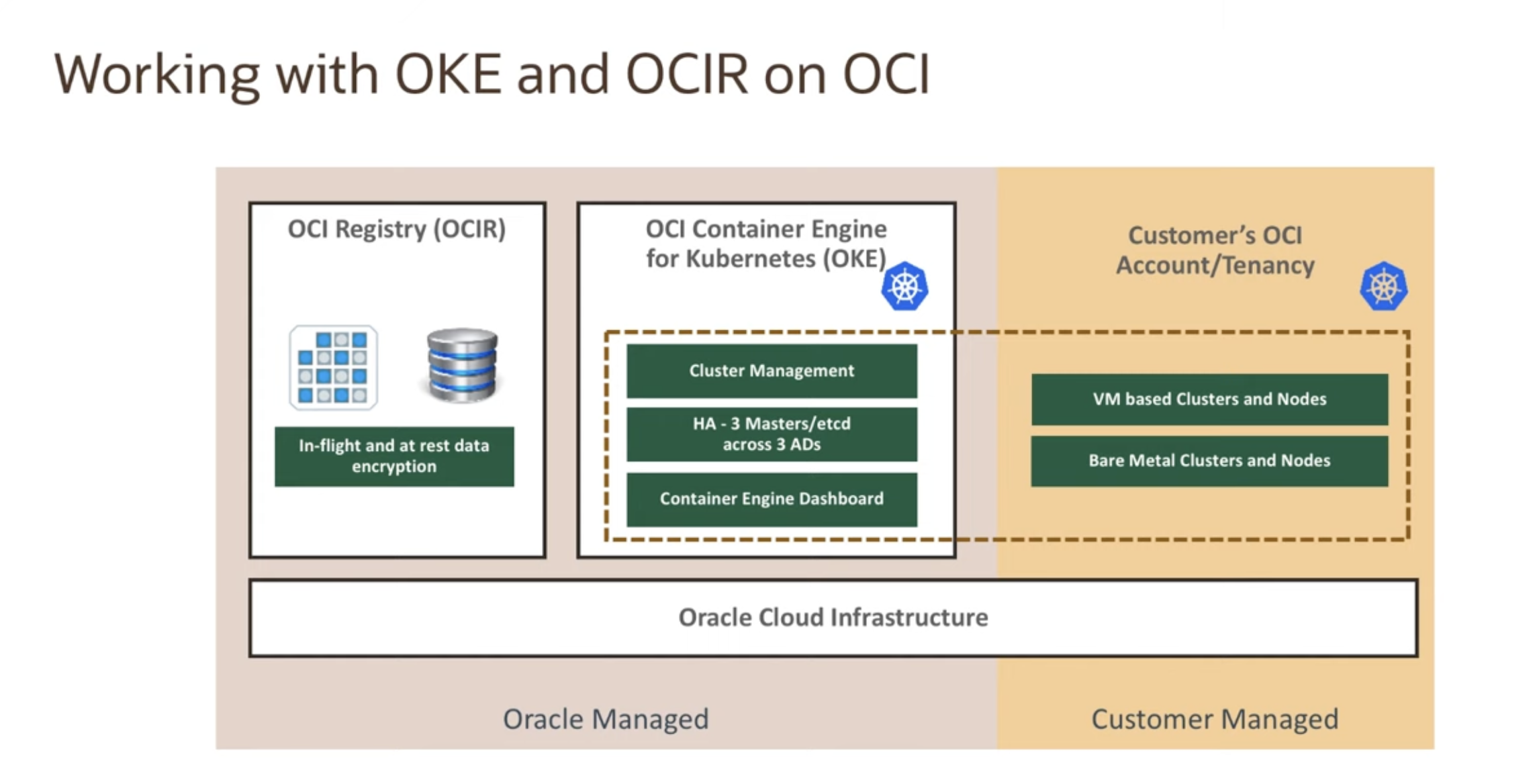
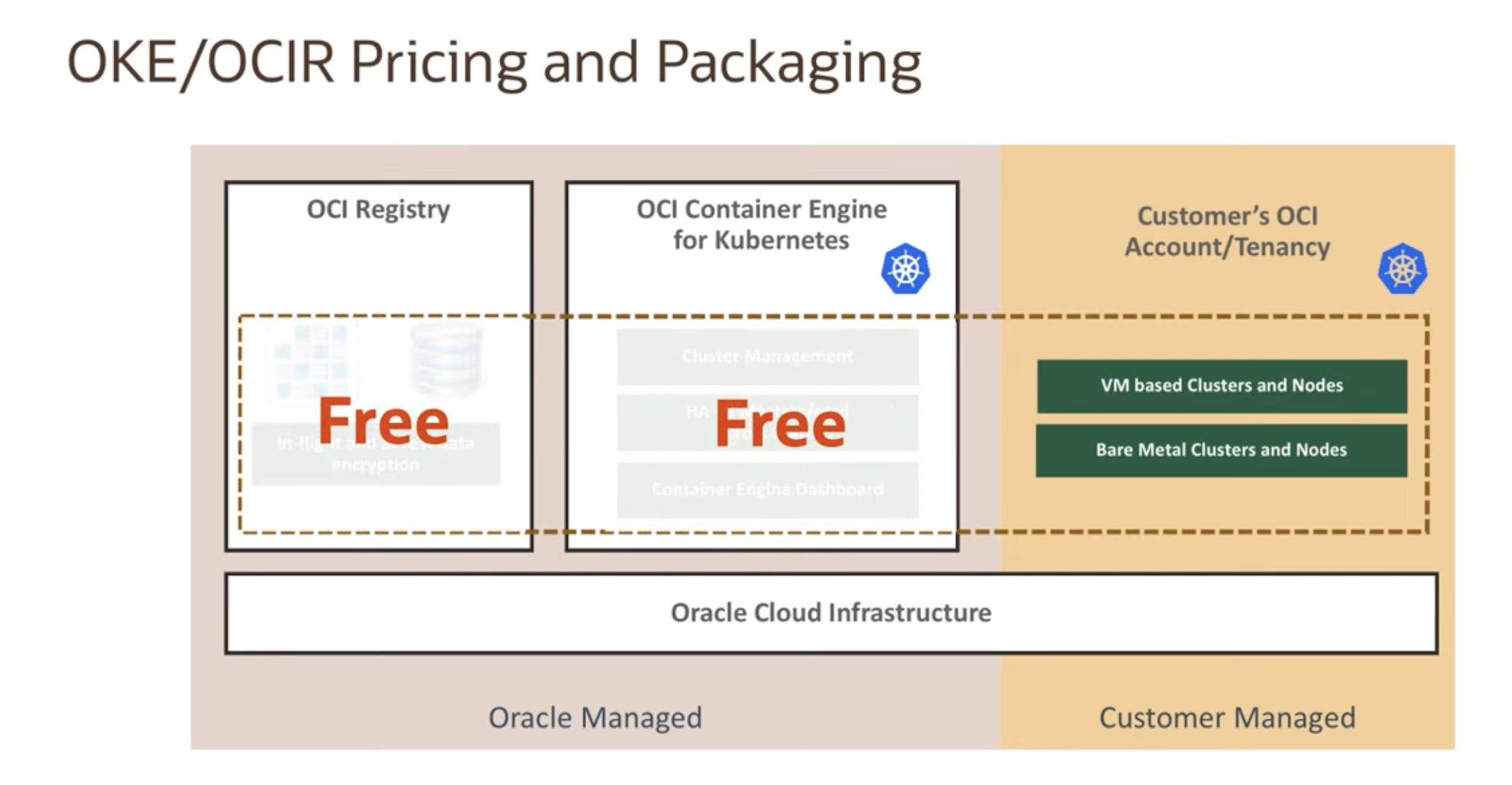 customers pay only for compute resources
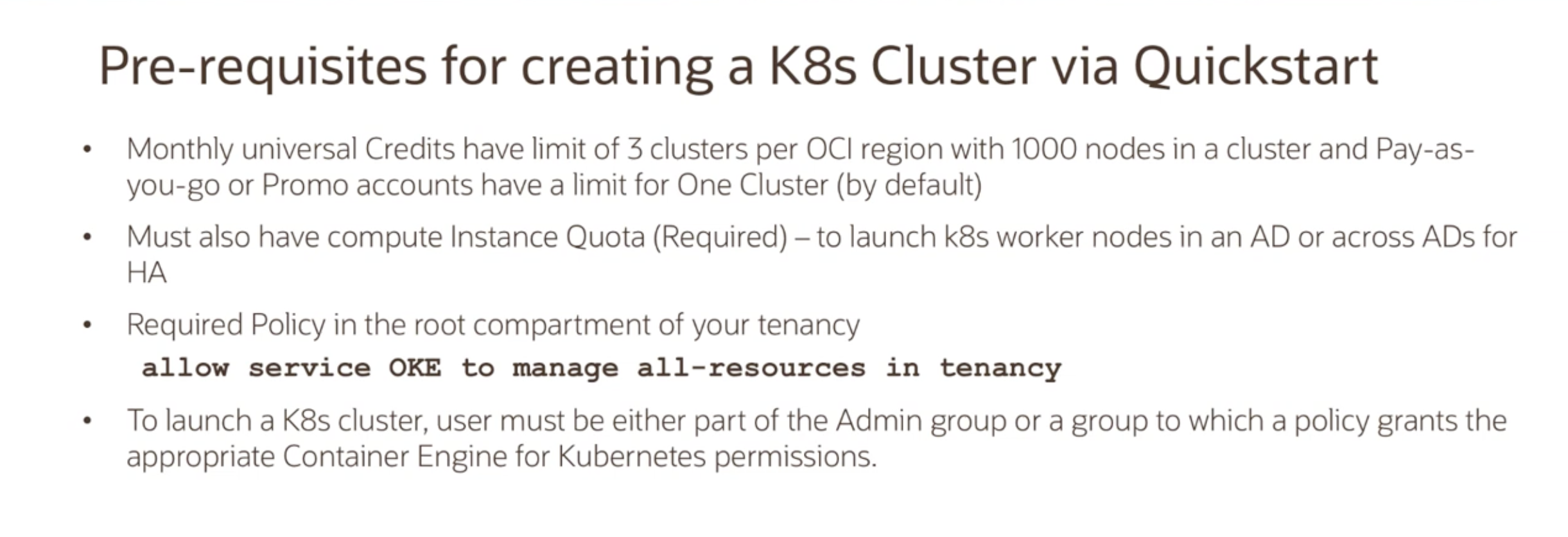
Creating Kubernetes cluster on OCI #
General #
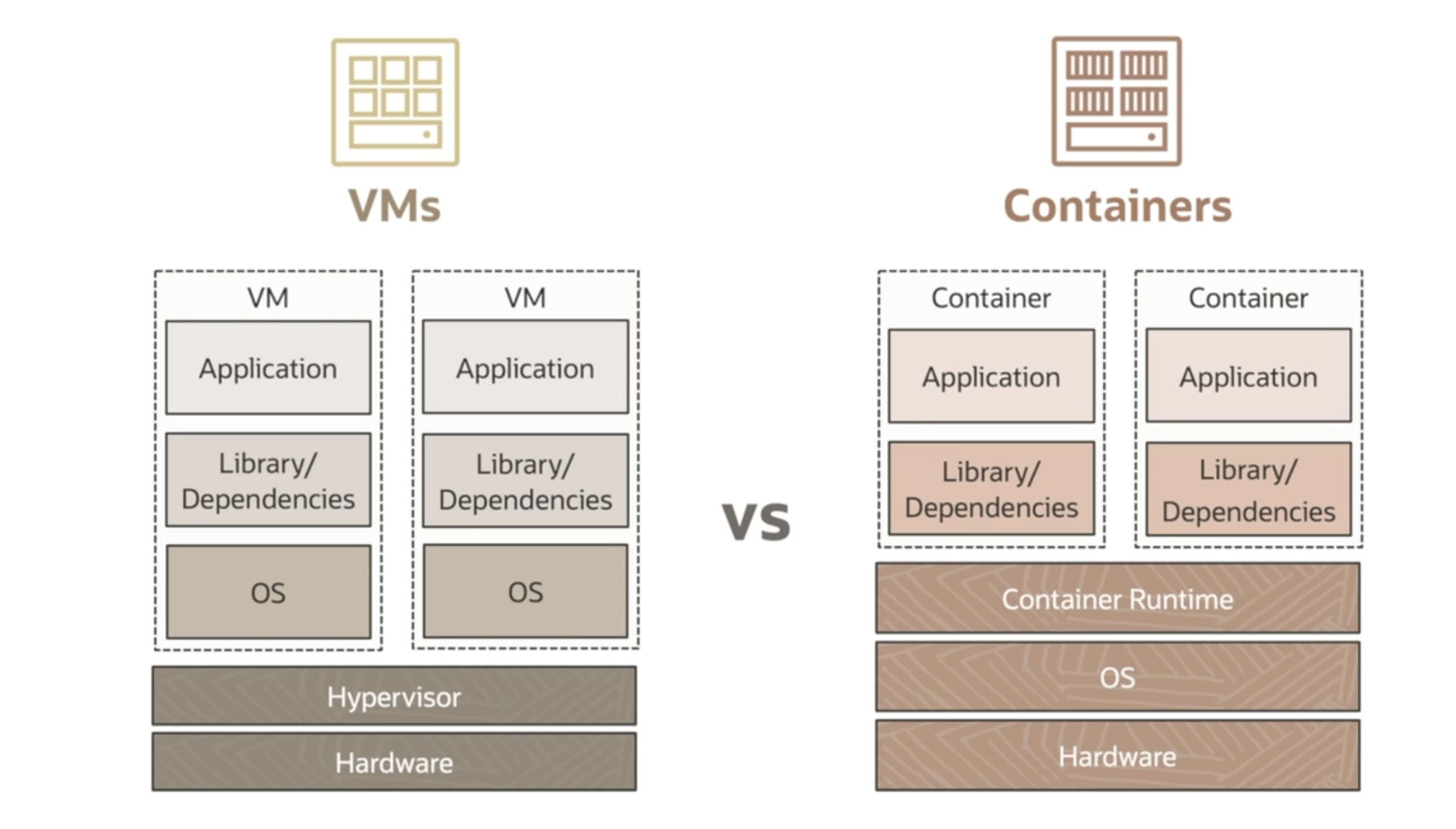
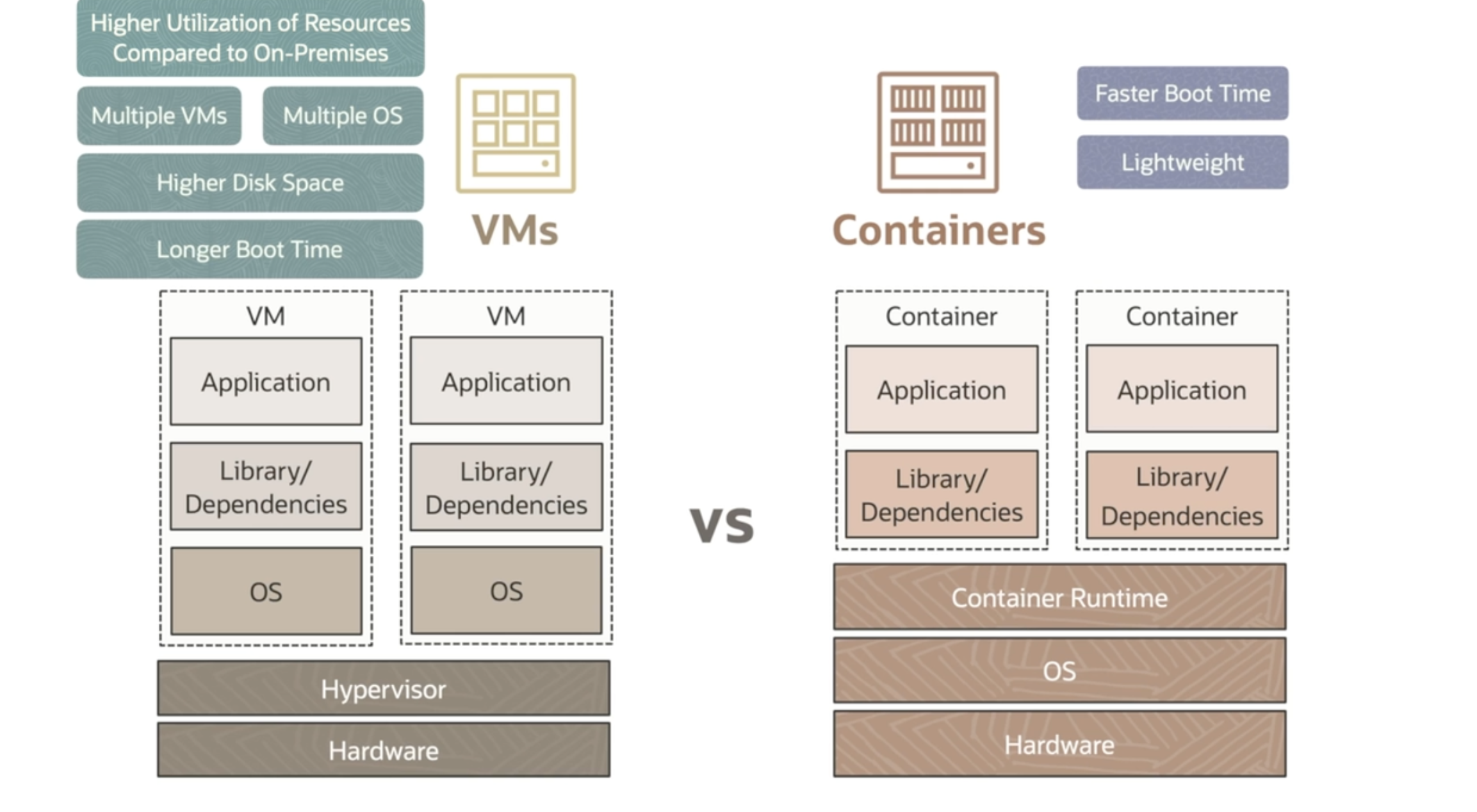
Villa(VM) vs apartment(Container)
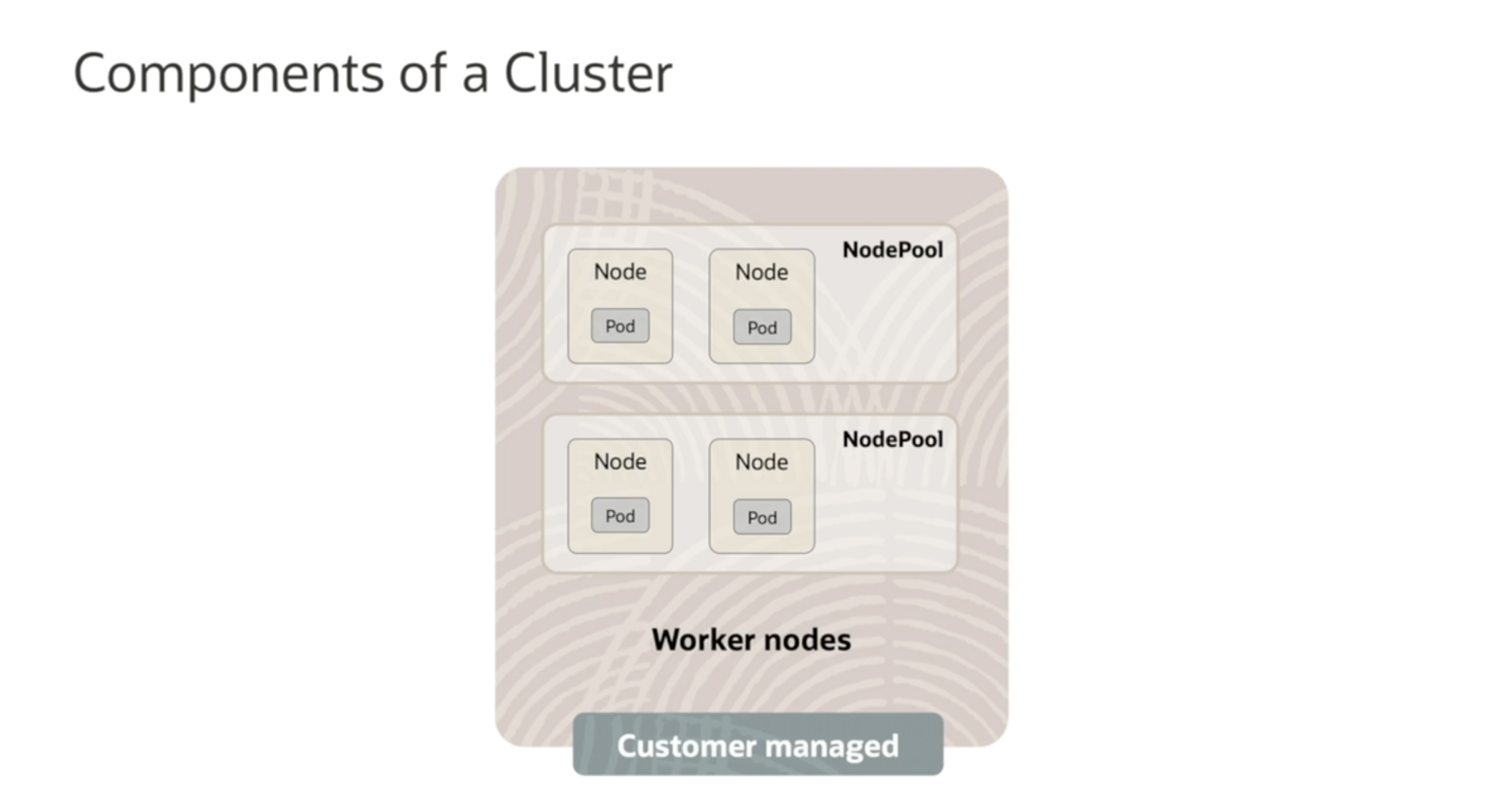
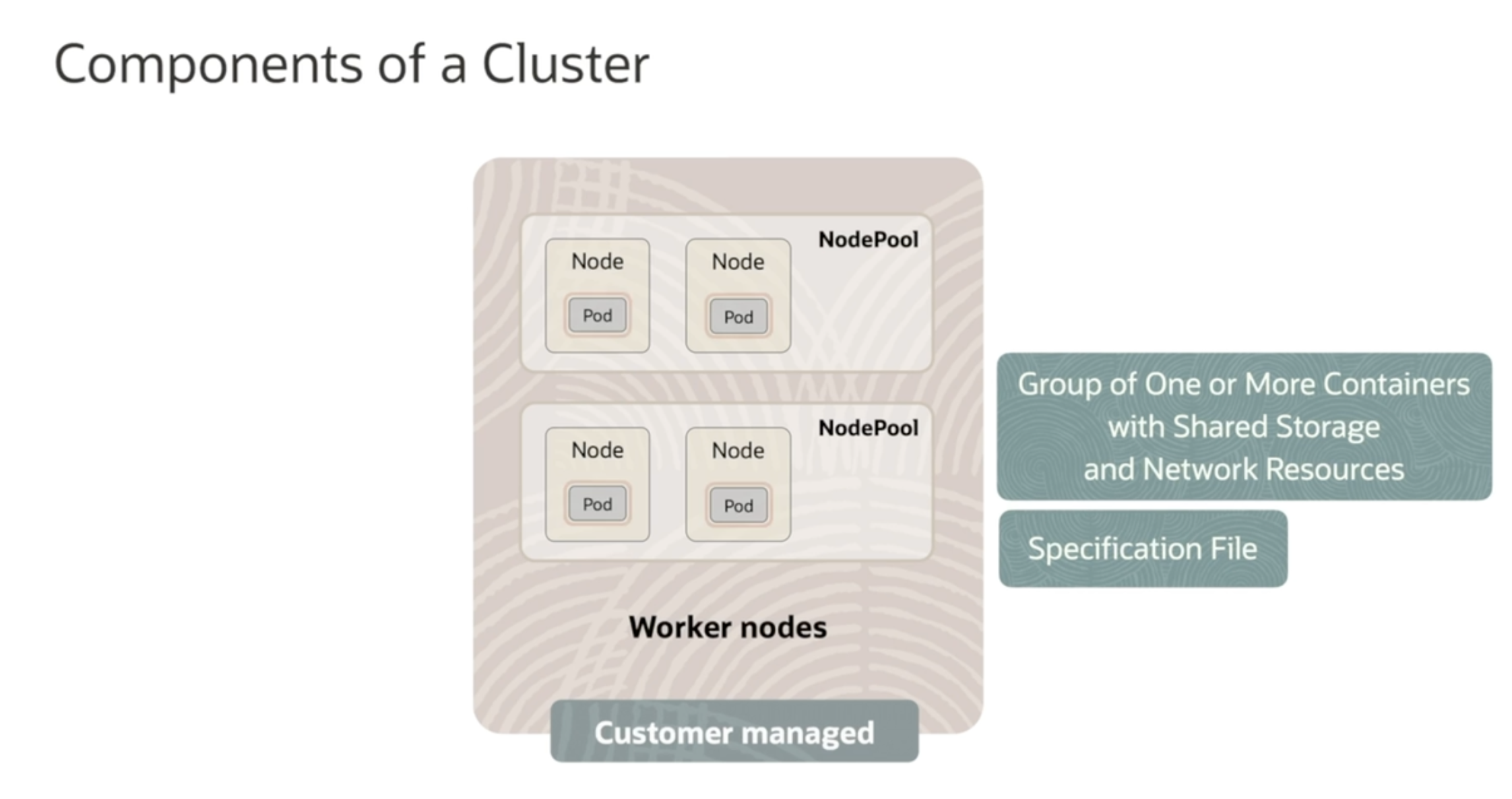
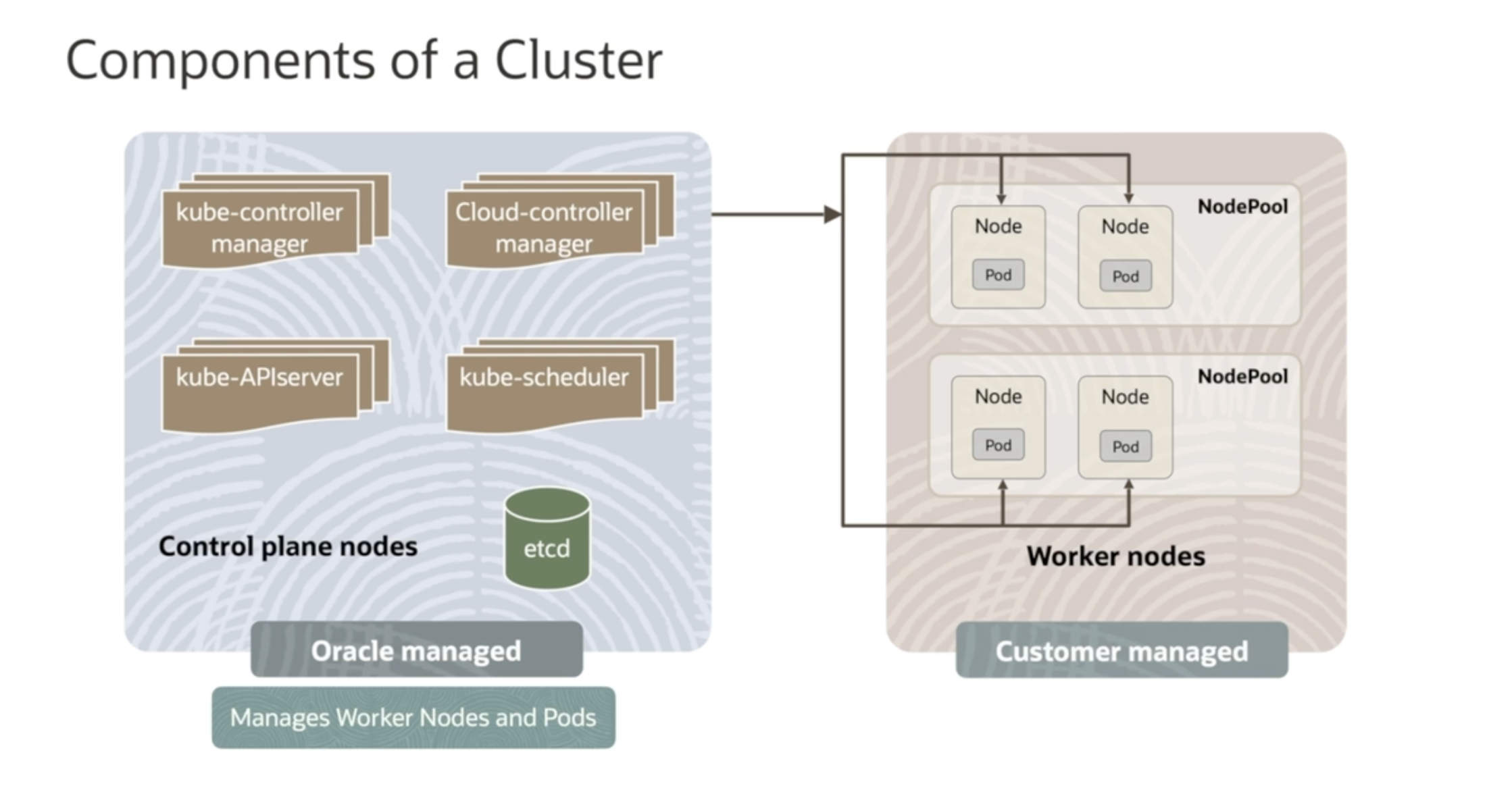
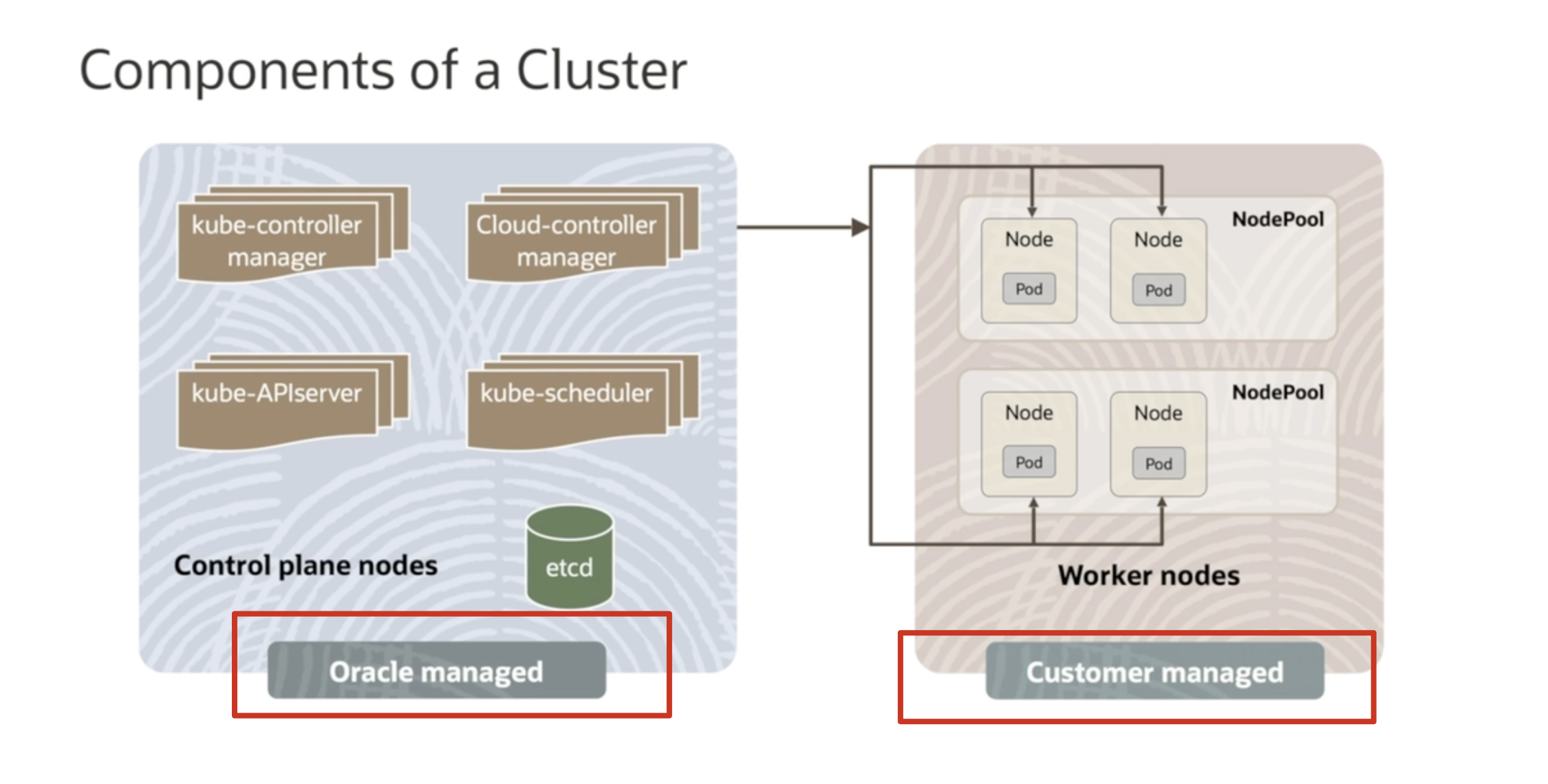
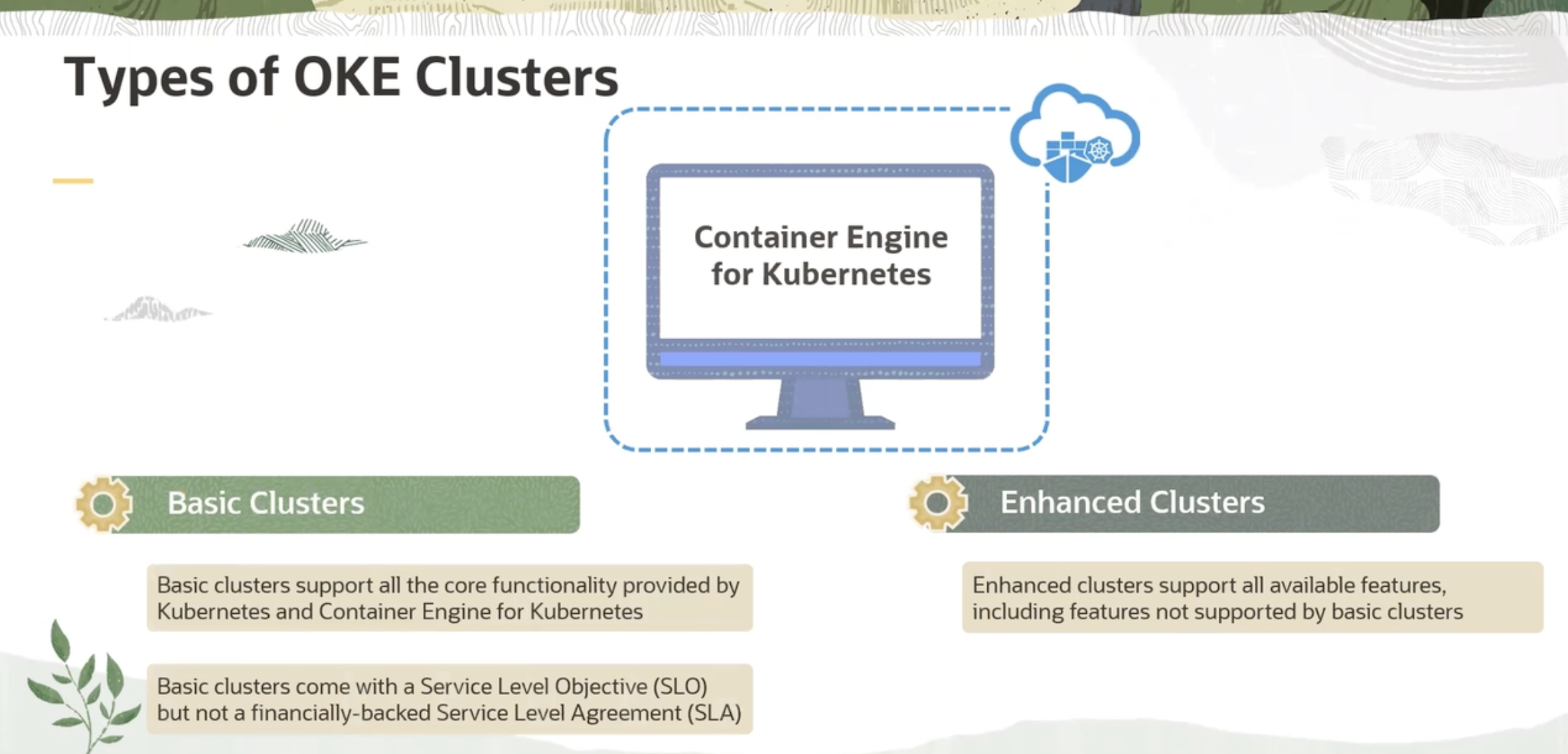
Two types of cluster #
Container workloads on OCI #
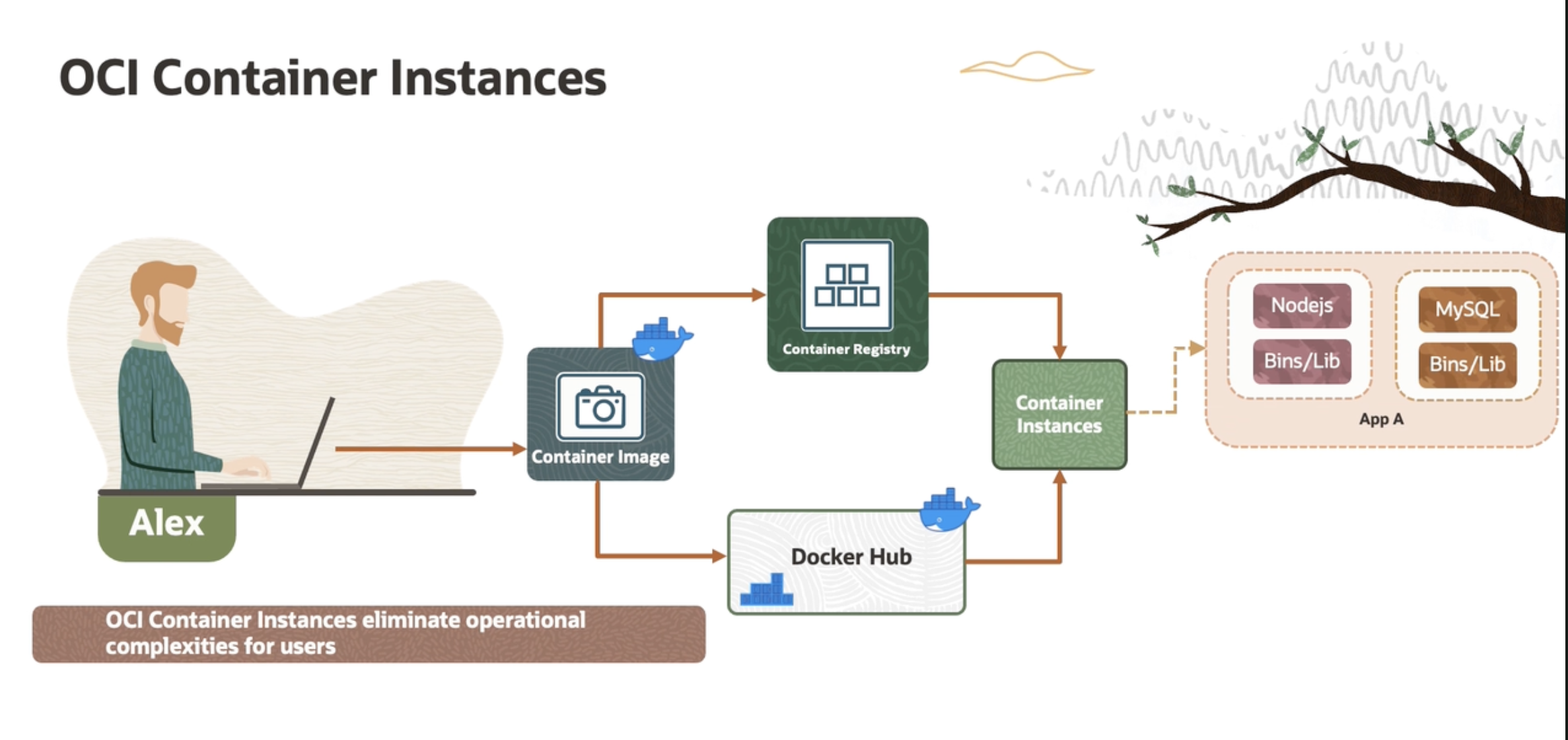
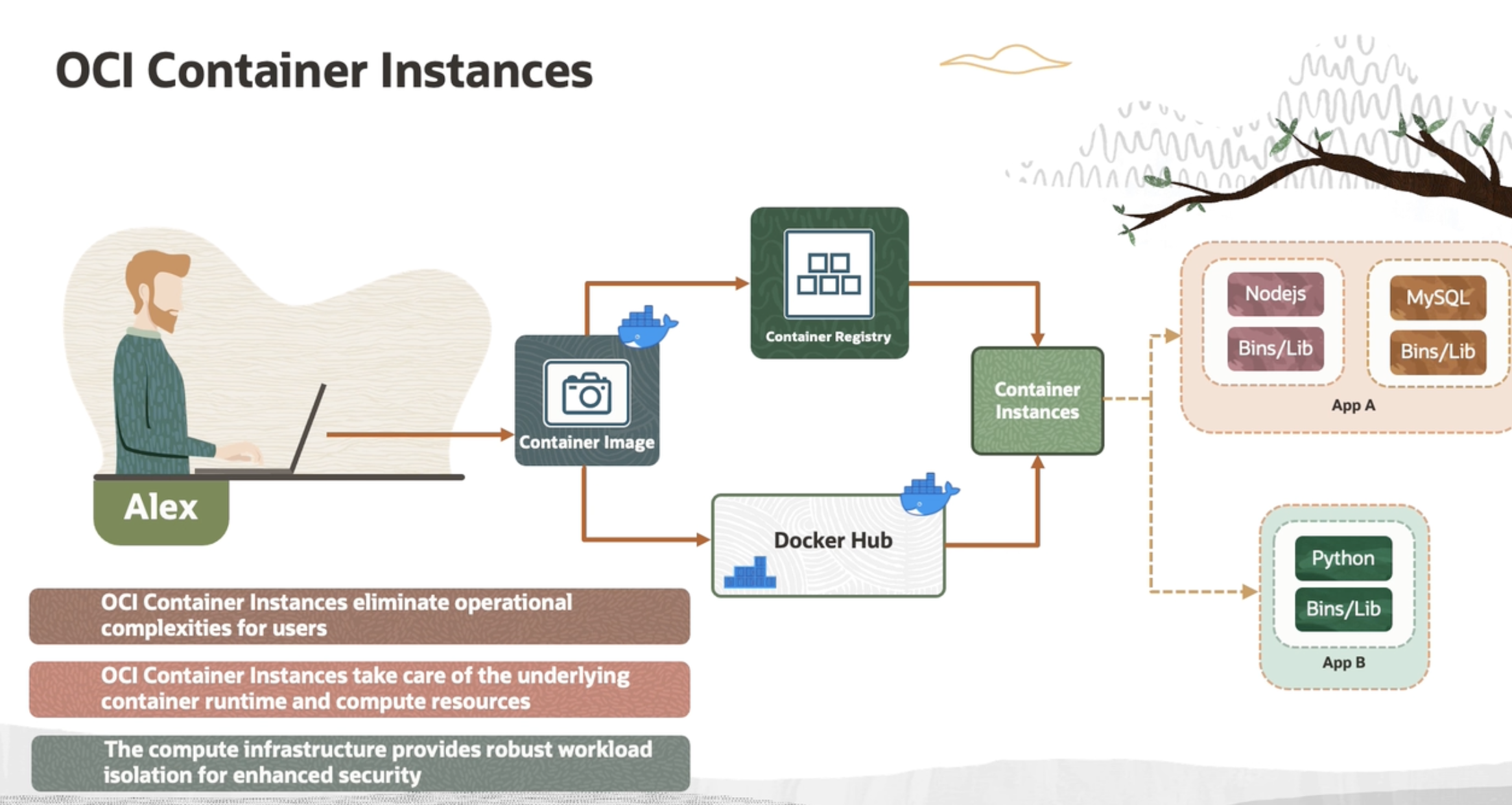
OKE vs OCI Container Instances #
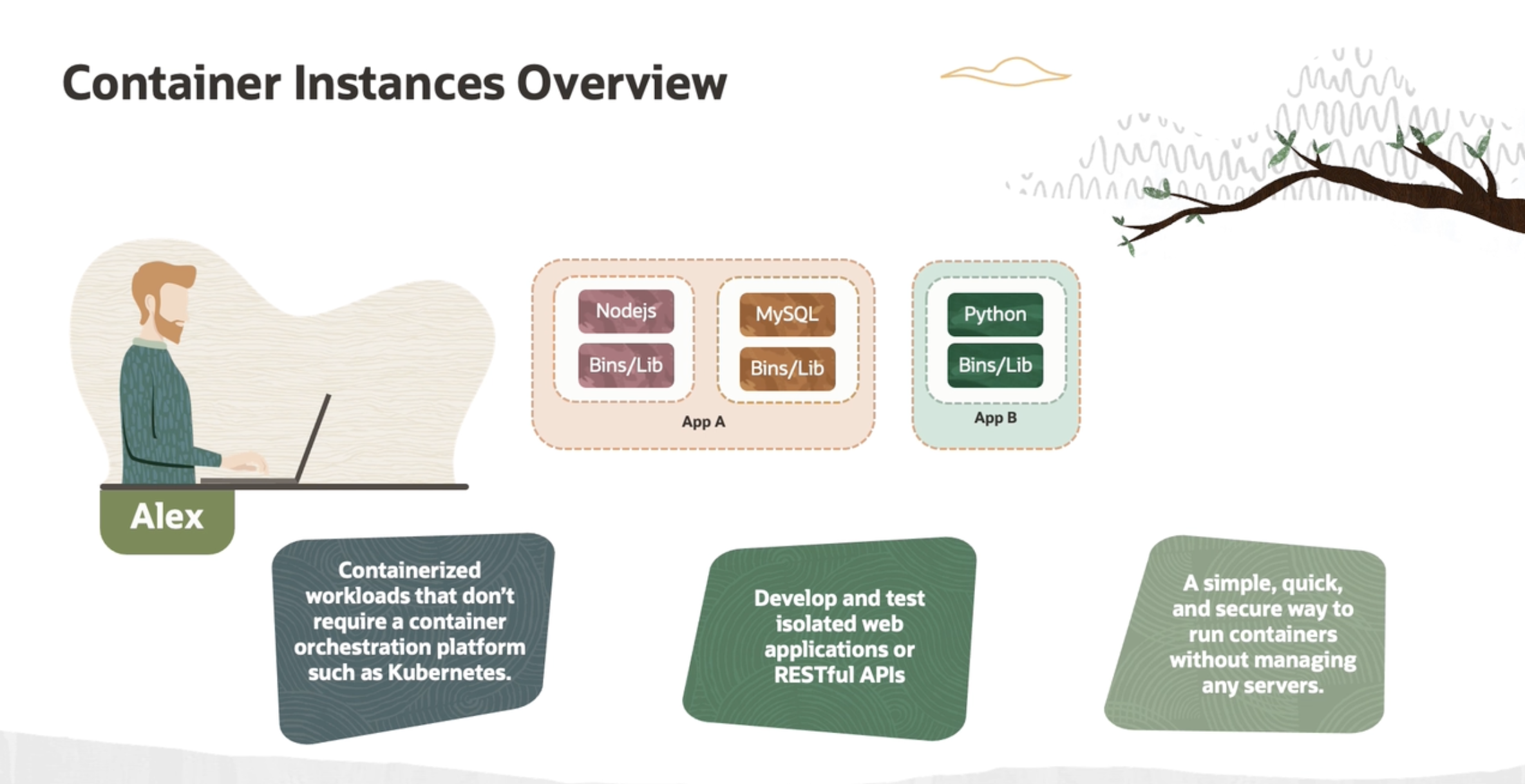
Container Instances is great for operating isolated containers that don’t require a container orchestration platform, such as Kubernetes.
- It’s suitable for APIs, web apps, CI/CD jobs, automation tasks, data/media processing, DevTest environments, and other use cases.
- However, it doesn’t replace container orchestration platforms. For use cases that require container orchestration, use OKE.
Creating container instances Deep Dive on youtube
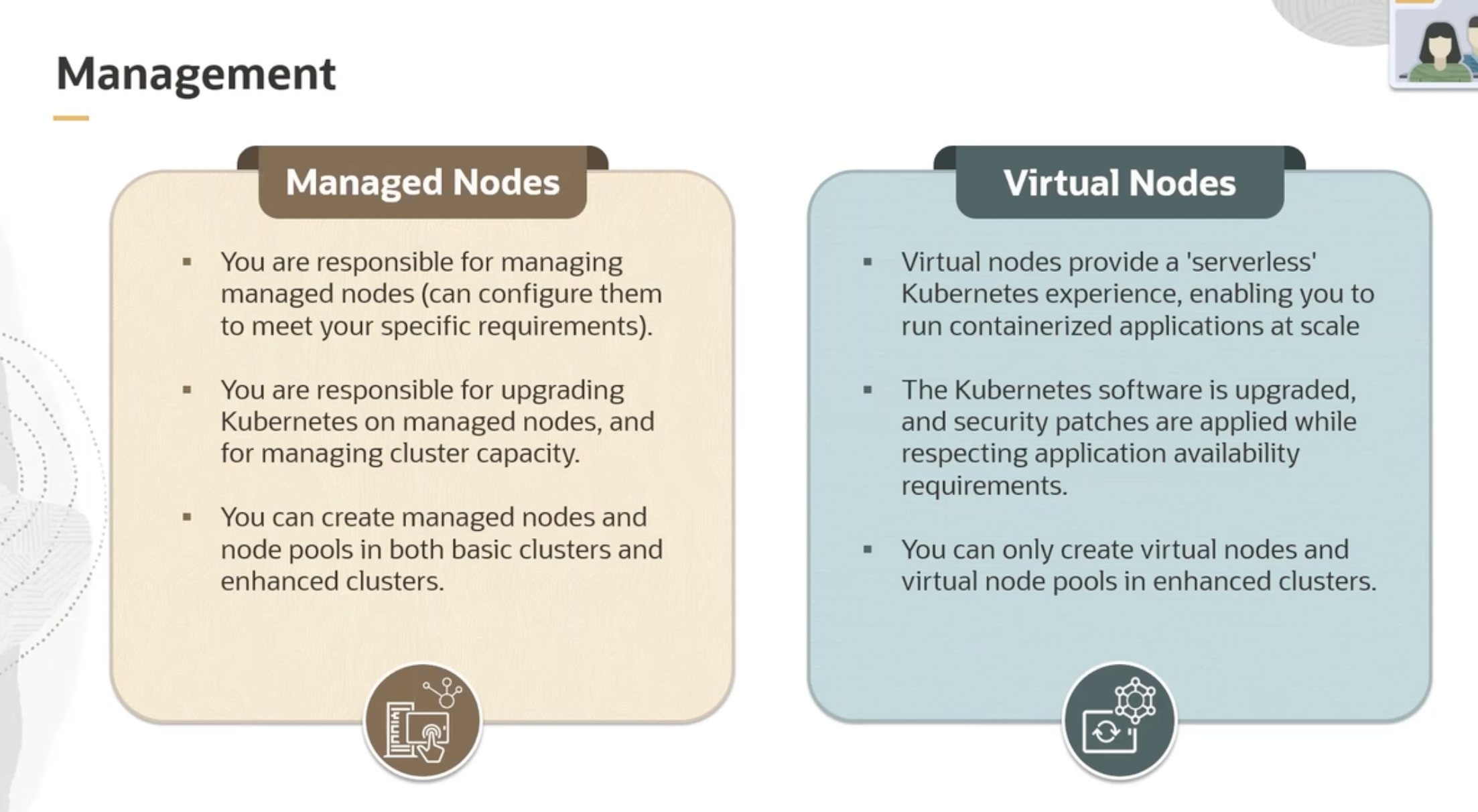
With Virtual Nodes, on the other hand, customers can run containerized applications at scale without having to worry about the operational tasks of managing, scaling, upgrading, and troubleshooting the node infrastructure. This delivers a pure serverless Kubernetes experience
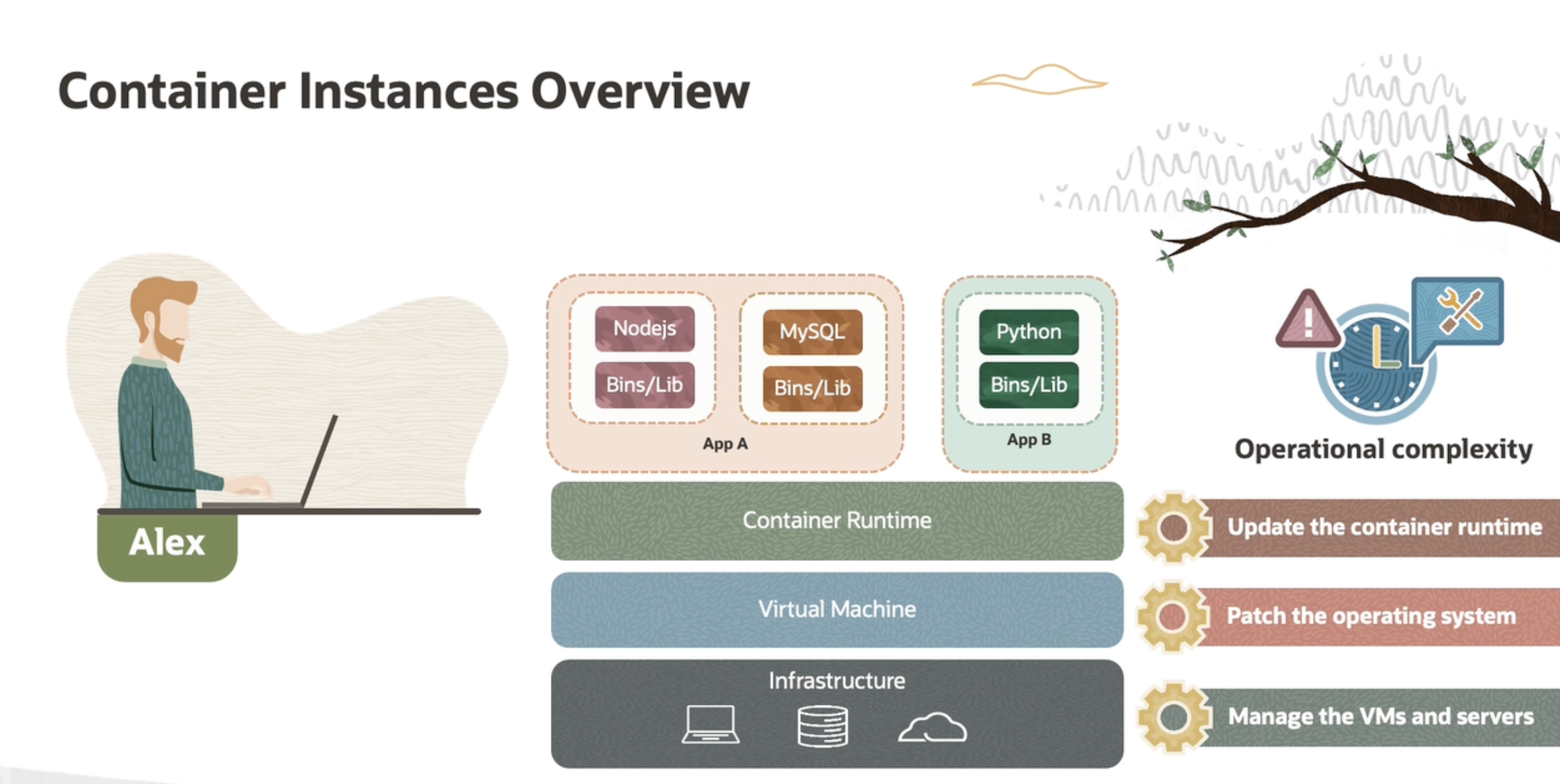
OCI Container Instances eliminates all the complexity of the traditional approach and allows you to run containers and applications in them without having to manage any infrastructure or servers. A container image is all that’s needed to run the application. The Oracle cloud manages the containerization server environment and computing resources. Containers run on fully managed computing resources optimized for workloads and provide reliable isolation for enhanced security. ref
Instances are also *suitable for running isolated web applications or RESTful APIs.. ref
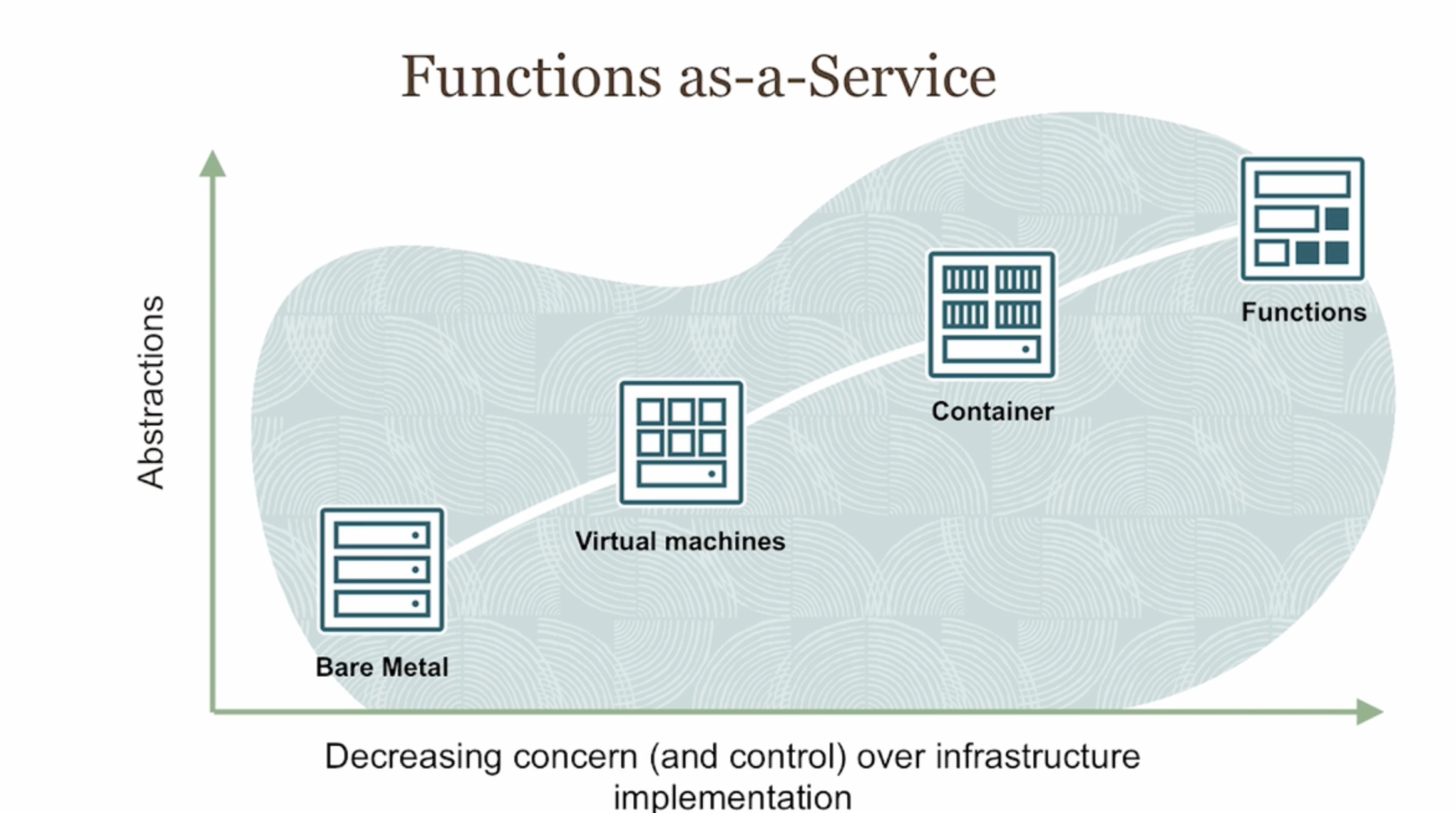
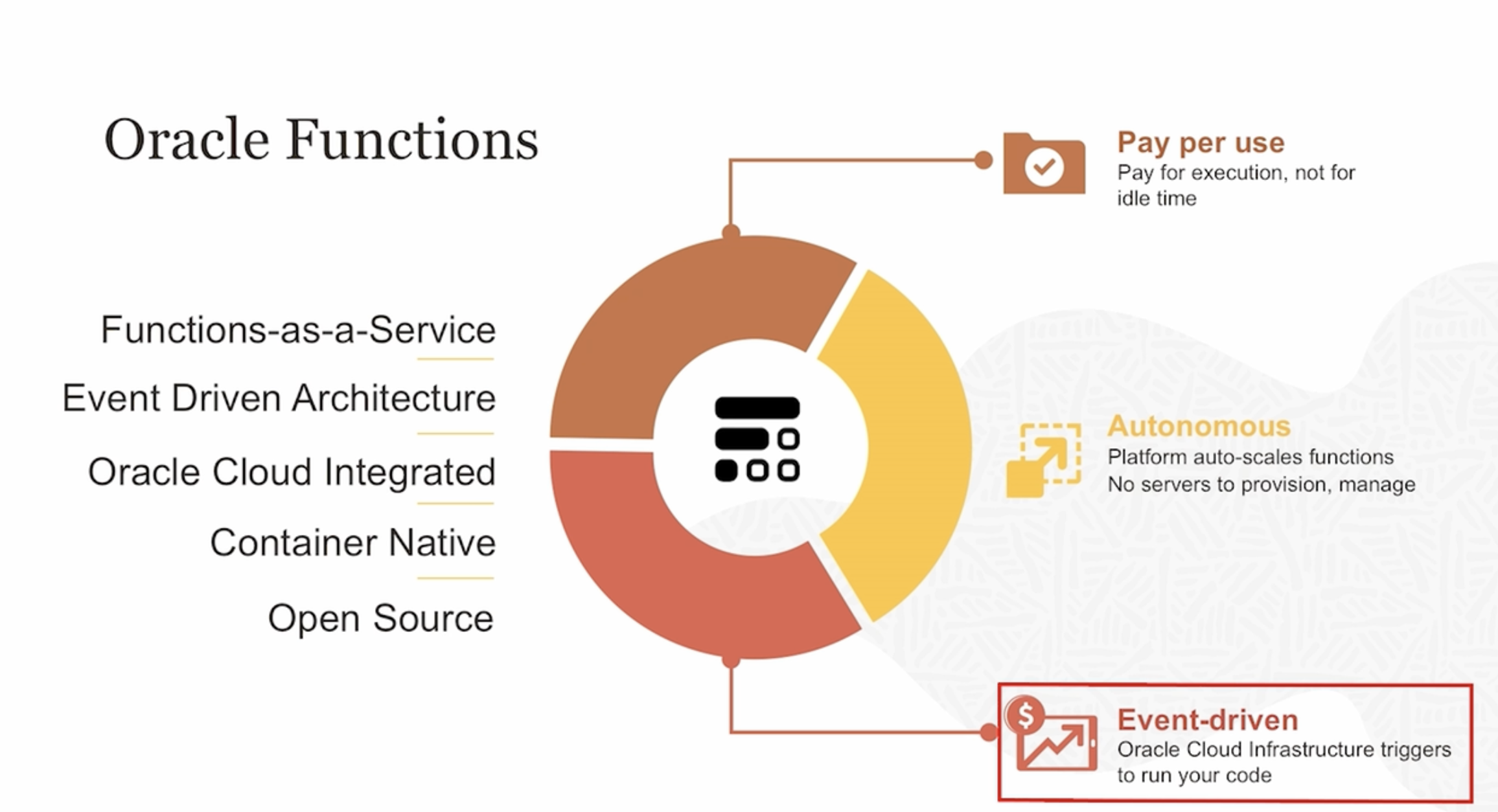
Oracle Functions or serverless #
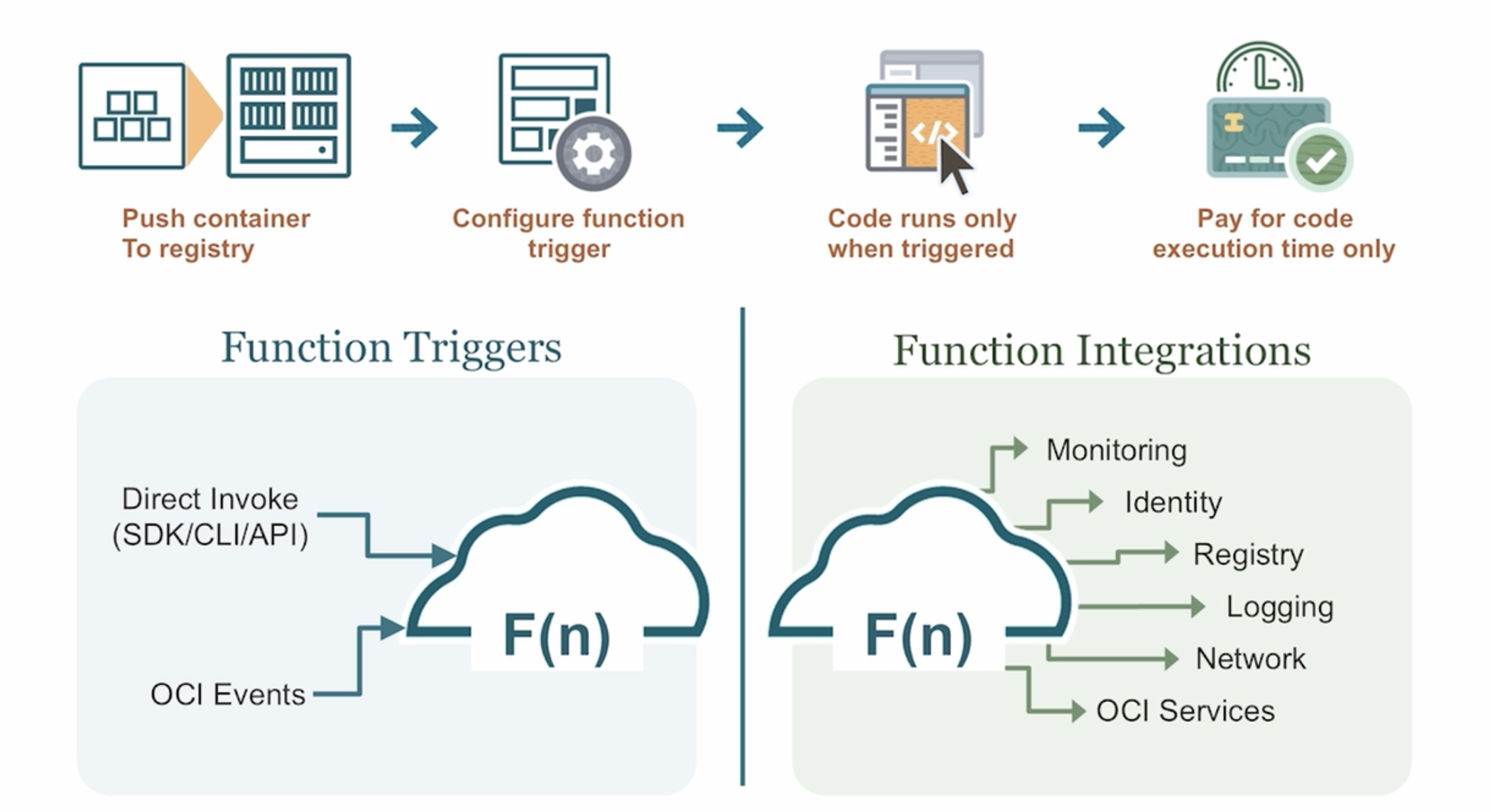
Event driven